

DC House Power: A Practical Guide to LiFePO4 Batteries for Solar, RV and Golf Carts
Answer: DC House Power is a brand and online store focused on LiFePO4 deep‑cycle batteries for golf carts, RVs, boats and small solar systems. These batteries may offer higher usable capacity, lighter weight and longer cycle life than many lead‑acid options, but require careful sizing, wiring and safety planning.
- Use LiFePO4 batteries sized to at least one to two days of typical load.
- Keep charge voltages within manufacturer LiFePO4 limits on solar or AC chargers.
- Avoid use if you cannot provide ventilation, clearances and overcurrent protection.
- Separate battery DC wiring from low‑voltage signal and combustible materials.
- People with limited electrical experience may consider professional installation help.
- Do not use as a medical or life‑support backup without expert engineering.
Visit : DC House Power dchousepower.com

Context & common issues
DC House Power focuses on lithium iron phosphate (LiFePO4) deep‑cycle batteries designed mainly for energy storage rather than engine cranking. LiFePO4 chemistries generally have lower fire propagation risk than many other lithium chemistries when used within ratings, but any energy storage system can still present shock and fire hazards without proper design. Source - nfpa.org
Residential energy storage guidance from fire authorities highlights enclosure, clearances, and access for firefighters as critical planning factors for any battery system. Source - nfpa.org Many people use LiFePO4 batteries indoors or in garages, but this should follow local building and fire codes where applicable. Source - zera.co.zw
Expert quote: “Lithium‑iron‑phosphate batteries can be relatively stable, but safe installation still demands good ventilation, clear labeling and appropriate disconnects,” notes Dr. Elena Morales, energy‑storage safety researcher at a university fire‑protection lab, referencing guidance from fire‑safety standards bodies. Source - nfpa.org
Key terms
LiFePO4 (lithium iron phosphate) – Lithium chemistry commonly used for deep‑cycle storage.
BMS (Battery Management System) – Electronics that monitor cells and may cut off on fault.
Depth of discharge (DoD) – Fraction of total capacity removed before recharging.
State of charge (SoC) – Approximate remaining battery capacity during use.
MPPT solar charge controller – Controller that optimizes PV power into a battery bank.
Inverter – Device converting DC battery power into AC household‑style power.

Brand overview
DC House Power sells LiFePO4 batteries in common system voltages such as 12 V, 24 V, 36 V and 48 V, along with selected chargers and wiring accessories. The product line targets off‑grid or mobile uses like RV house banks, trolling motors, golf carts and small home solar storage rather than utility‑scale systems.
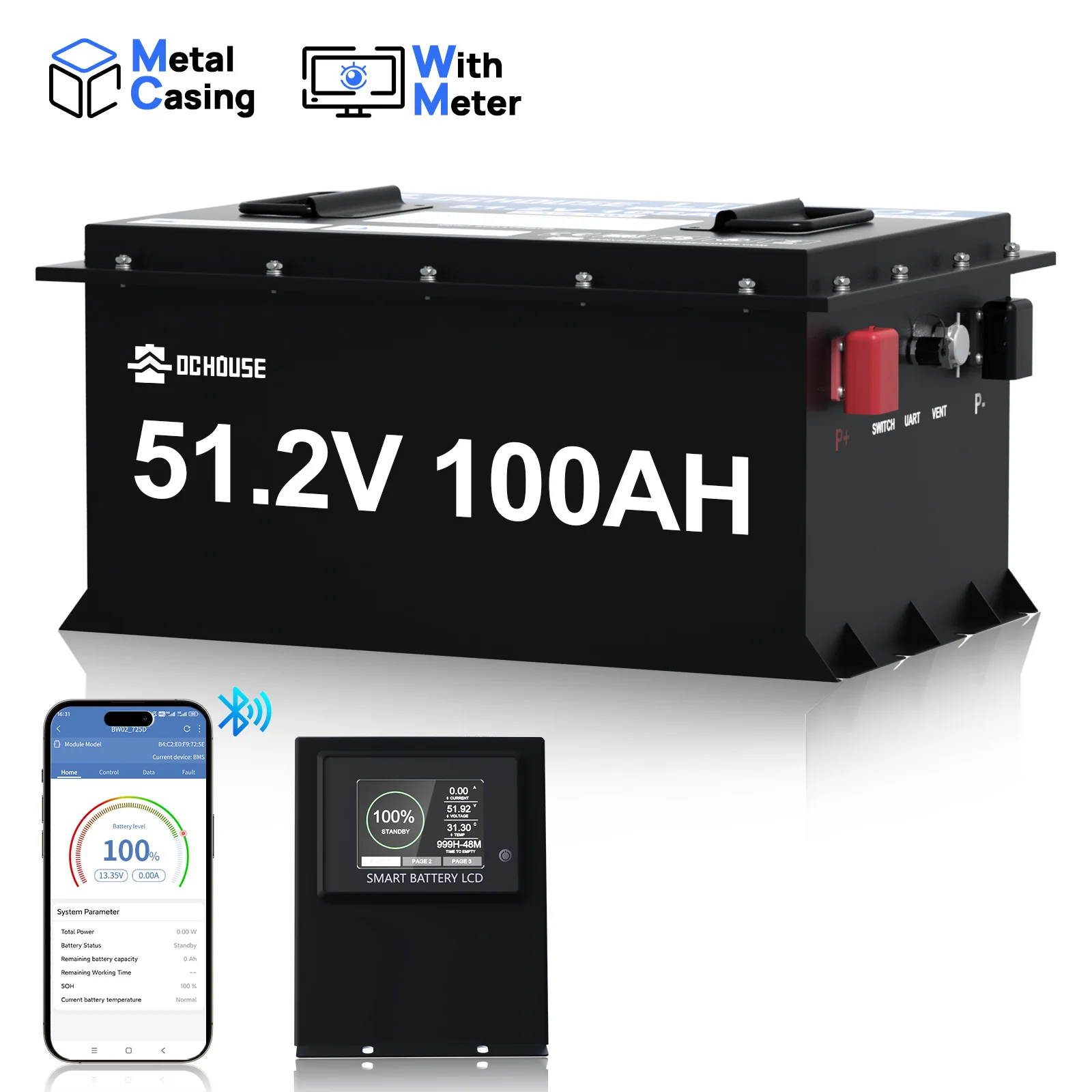
Many models include an internal BMS and some variants add Bluetooth monitoring for SoC and cell‑level data via an app, which may help users spot wiring or load issues early. Packs are typically marketed as deep‑cycle units aimed at frequent charge–discharge use rather than short high‑current cranking.
Common use cases
Typical DC House Power installations include replacing multiple lead‑acid batteries in a golf cart with one or more LiFePO4 units at 36 V or 48 V, to reduce weight and increase runtime between charges. In RVs and camper vans, users often pair one or more 12 V or 24 V packs with rooftop solar and a DC‑DC charger from the alternator.
Small off‑grid solar systems may use 12 V or 48 V batteries for lighting, electronics, small refrigeration, or tool charging, usually connected through an MPPT solar charge controller and sometimes an inverter for AC loads. Marine users may power trolling motors, depth sounders and onboard electronics from LiFePO4 packs to benefit from flatter discharge voltage and reduced maintenance compared with many flooded lead‑acid batteries.
Framework / execution guide
Step 1: Assess your needs
Start by listing loads: for example lighting, fans, fridge, pumps, golf cart motor or trolling motor, then estimate daily watt‑hours or amp‑hours at system voltage. Many people use at least one to two days of average consumption as a minimum battery energy target to handle clouds, reduced driving or partial charging.
- Estimate average and peak loads; include inverter overhead if using AC appliances.
- Decide on nominal system voltage (12 V for smaller systems, 24–48 V for higher power).
- Identify whether the battery will be cycled daily (solar/RV) or intermittently (golf cart).
Step 2: Choose battery configuration
For many small systems, a single 12 V or 24 V LiFePO4 battery may be simplest, while higher‑power installs might need multiple units in parallel or series as approved by the manufacturer. Always follow documentation for maximum series and parallel counts to avoid overstressing the BMS and cabling. Source - energy.gov
- Use parallel connections to increase amp‑hours at a given voltage when allowed.
- Use series connections only when the battery and BMS explicitly support it.
- Keep cable lengths short and equal within parallels to balance current sharing.
Step 3: Select charger and controller
Solar systems usually need an MPPT charge controller configured specifically for LiFePO4 profiles, with charge and float voltages within the battery specifications. Shore‑power or generator charging often uses a compatible lithium battery charger or an inverter‑charger with configurable charging stages. Source - energy.gov
- Confirm maximum charge current per battery and avoid exceeding the combined limit.
- Program bulk/absorption/float voltages following the battery manual, not generic defaults.
- Consider a DC‑DC charger from vehicle alternators to avoid alternator overload.
Step 4: Plan location and enclosure
Indoor locations may need good airflow and clearances around batteries so that temperature stays within the recommended range and firefighters can access disconnects. Safety authorities typically advise mounting energy storage away from sleeping spaces where practical, and on non‑combustible or fire‑resistant surfaces. Source - nfpa.org
- Prefer garages, dedicated utility rooms, or ventilated compartments over bedrooms.
- Maintain space around batteries for inspection, heat dissipation and label visibility.
- Provide clear access to disconnect switches and overcurrent devices at eye level.
Step 5: Wire and protect the system
Battery banks should include appropriately sized fuses or breakers close to the positive terminals, with cabling sized for maximum continuous and surge currents. Many fire‑safety and electrical resources emphasize using listed components and following wiring standards for terminations, strain relief and mechanical protection. Source - energy.gov
- Install a main DC disconnect and appropriately rated DC breaker or fuse.
- Use lugs correctly crimped and insulated; avoid loose strands or under‑torqued bolts.
- Route cables away from sharp edges, moving parts, fuel lines or exhaust components.
Step 6: Configure monitoring
If the battery supports Bluetooth or external monitors, set up the app or meter to watch SoC, current and pack voltage during first uses. Many people use these tools to catch reversed polarity, unexpected parasitic loads or undersized conductors before problems grow.
- Check that charge voltages match targets during bulk and float stages.
- Monitor battery temperature in hot or confined spaces until behavior is familiar.
- Periodically verify capacity with controlled discharge tests if practical.

Tips & common mistakes
A frequent mistake is mixing batteries of different ages, capacities or brands in the same bank, which may lead to imbalance and premature cutoff. Another issue is using generic lead‑acid charging profiles that overcharge LiFePO4 packs or never reach full SoC, reducing usable capacity over time. Source - energy.gov
People sometimes underestimate ventilation and access, tucking batteries into small sealed boxes with combustible materials or fabrics nearby. Standards and guidance on residential energy storage recommend adequate clearances, mechanical protection and appropriate signage to support safe maintenance and emergency response. Source - nfpa.org
Who should NOT use
- Households unable to meet basic safety, clearance and overcurrent‑protection requirements.
- People depending on the system for life‑support or critical medical equipment uptime.
- Users unwilling to follow battery manuals, codes or local authority guidance.
- Installers operating outside licensing or inspection requirements where those apply.
How to decide if DC House Power fits you
DC House Power batteries may suit users seeking relatively affordable LiFePO4 storage for golf carts, RVs and modest solar systems who can follow written wiring and configuration instructions. They may be less suitable for sites needing formal engineering approvals, integrated building management systems or advanced grid‑interactive features.
If you already own lead‑acid banks, consider total cost of ownership: LiFePO4 packs often support many more deep cycles at a higher usable DoD, which can reduce replacement frequency even if upfront costs are higher. Source - energy.gov Quantitatively, LiFePO4 batteries may reach several thousand deep cycles, while many flooded lead‑acid batteries provide substantially fewer cycles under similar DoD and temperature conditions. Source - energy.gov
FAQ
Can DC House Power batteries be used indoors?
LiFePO4 batteries from brands like DC House Power are often installed indoors, typically in garages or utility areas with ventilation, clearances and overcurrent protection. Always review local rules on residential energy storage and follow safety guidance from fire‑safety organizations. Source - nfpa.org
Are these batteries suitable for rooftop solar systems?
Many users pair LiFePO4 batteries with rooftop solar arrays using an MPPT controller configured for lithium charging voltages. System suitability depends on total array size, load profile, charge‑controller capabilities and compliance with electrical and building codes. Source - energy.gov
What about golf carts or neighborhood vehicles?
DC House Power offers higher‑voltage packs and kits often used to replace multiple lead‑acid batteries in golf carts, reducing weight and potentially extending range. Adequate mounting, impact protection and correct charger configuration are essential for safe operation.
How much maintenance do LiFePO4 batteries require?
LiFePO4 batteries typically require less routine maintenance than many flooded lead‑acid batteries because they do not normally need water top‑offs and have sealed enclosures. Source - energy.gov Maintenance is still needed for cables, terminals, ventilation, firmware updates and periodic performance checks.
Safety & sources
This article is informational only and does not replace professional electrical, fire‑safety or engineering advice. Installation and use of energy storage should always align with local regulations, equipment manuals and guidance from qualified professionals. Source - nfpa.org


Related collection
Explore Related Collections
Browse culinary and botanical collections related to this topic.
Browse Ingredient CollectionsProducts and collections are presented for general ingredient, culinary, botanical, craft, or gardening use. Content on this site is educational only and is not medical advice.
Leave a comment