

Vietnam Forest Memories: Food, Fire, and Conservation
This personal story connects childhood walks and forest foods in rural Vietnam with a later commitment to conservation after drought and fire disrupted a familiar landscape. It explains what the author remembers directly, why those memories shaped environmental advocacy, and how forests can support food traditions and everyday life without treating one experience as universal.
Walking with My Mother Through the Trees
As a child in rural Vietnam, I walked in nature with my mother and gathered foods such as bamboo shoots and berries. The forest was both a source of food and a place for exploration.
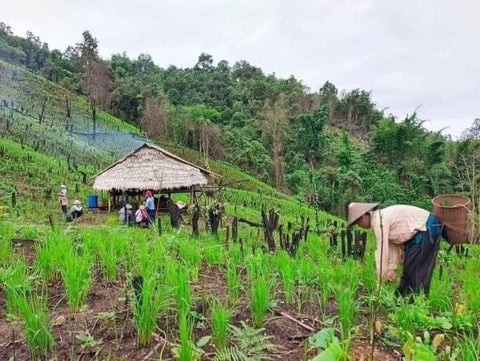
Those memories connect the landscape with family meals and the practical knowledge needed to recognize and prepare gathered ingredients. I cannot turn one childhood experience into a description of every rural family, but it explains why forest loss later felt personal to me.
Forest Foods and the Table They Set
In my childhood memories, forest-gathered ingredients contributed to familiar meals. Bamboo shoots and berries were not abstract symbols of biodiversity; they were foods that linked the table to the surrounding landscape.
Food traditions depend on more than a list of ingredients. They also depend on access, seasonal knowledge, preparation, and the ability to pass practices between generations. The importance of any particular forest food varies by household and region, so this account should be read as one personal perspective rather than a universal description of Vietnam.
How Forests Support Everyday Food and Cultural Life
The table below outlines some of the ways forests contribute to food systems and cultural practices, based on broadly documented ecological and social functions rather than claims specific to any single community.
| Forest Function | Possible Everyday Connection |
|---|---|
| Shade and local climate | Can moderate heat and support vegetation near forest edges |
| Soil and water protection | Tree cover can reduce erosion and help protect local water systems |
| Wild foods | Some forests provide shoots, greens, berries, fungi, and other ingredients |
| Wind protection | Trees can reduce wind exposure for nearby land |
| Wildlife habitat | Forests provide shelter and food for many species |
| Cultural practice | Gathering and food traditions may carry knowledge between generations |
The Summer of Smoke
A long period of drought changed the forest I remembered. One summer, I saw smoke rising from the trees and witnessed the effects of a forest fire. I do not claim to know its cause.
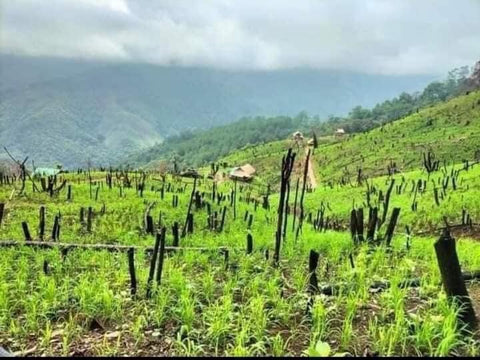
The fire disrupted access to familiar forest foods and changed how I understood the landscape. The original memory is personal: it does not establish the total scale of the fire, the experience of every resident, or the condition of every food source in the area.
Memory Versus Broader Fact: A Distinction Worth Making
Personal memory can explain motivation, but it cannot substitute for measured evidence. Several distinctions matter:
Tree timelines vary. There is no universal rule that a tree needs twenty years to mature or bear fruit. Growth, maturity, and fruiting depend on species, climate, soil, management, and other conditions.
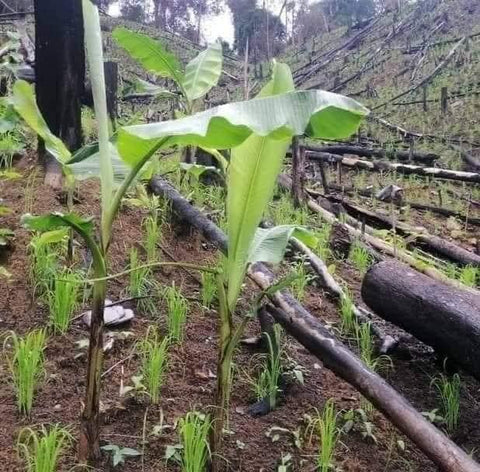
Fire recovery varies. Some vegetation can regenerate after fire, while repeated or severe disturbance may slow or prevent recovery. A photograph of new growth documents one place and moment; it does not prove complete ecological recovery.
Land-clearing practices require context. Slash-and-burn or swidden systems have different histories, scales, and fallow cycles. Conservation discussions should examine local conditions and avoid blaming communities through a single simplified narrative.
From Childhood Memory to Conservation Commitment
The childhood experience of forest foods, followed by drought and fire, helped shape my interest in studying and speaking about environmental protection.
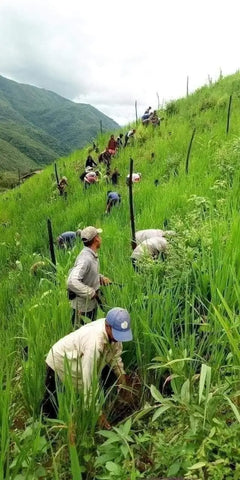
My talks focused on planting trees, protecting forests, and reducing damaging land-clearing practices. I used practical examples: trees can provide shade, reduce wind exposure, support wildlife, and contribute organic matter to soil. The importance of any single tree depends on its species, age, location, and surrounding ecosystem.
The cultural connection mattered as well. When landscapes change, access to familiar ingredients and the practices built around them can also change. That does not mean every family or community experiences loss in the same way; it means conservation can include ecological, food, and cultural considerations together.
Food Traditions Depend on Living Systems
A recipe can be written down, but a food tradition also depends on ingredients, access, skills, and the places where knowledge is practiced. When a forest ingredient becomes scarce, a household may substitute something else, change the dish, purchase the ingredient from farther away, or stop preparing it. Each response has different costs and meanings.
Conservation does not require freezing cuisine in the past. Food traditions naturally change. The goal is to preserve options: healthy habitats, responsible access where gathering is permitted, and the knowledge needed to identify and prepare ingredients safely. This is especially important because an ingredient that is traditional in one region may be uncommon, protected, or unsafe to collect in another.
Forest protection and food production should not be treated as automatic opposites. Depending on local conditions, agroforestry, restoration, protected areas, and more careful land management can combine trees with farming. The appropriate approach depends on ecology, land rights, local livelihoods, and decisions made with the people who live there.
How to Tell Forest Stories Responsibly
Personal stories can make conservation understandable, but they should remain clear about their limits. A responsible account should:
- Separate memory from measurement. Describe what was personally seen, then distinguish it from claims that require ecological data.
- Avoid universal language. One fire, family, or food tradition cannot represent every forest or community.
- Respect local knowledge. Do not turn residents, gathering practices, or rural hardship into scenery for an outsider’s narrative.
- Name uncertainty. If the cause, scale, species, or recovery timeline is unknown, say so plainly.
- Focus on choices, not blame. Forest loss involves land use, policy, markets, climate, and household needs. Simplistic moral judgments rarely explain the full situation.
These principles make the story less dramatic, but more useful. Conservation is better served by accurate limits than by claims that sound powerful and cannot be supported.
Ways Readers Can Support Forests
Conservation is not a single action or a single campaign. It is an ongoing set of choices, made at different scales, by many different people. The following are some approaches that individuals and communities have found meaningful — offered here not as prescriptions, but as possibilities worth considering.
Learn about local forest ecosystems. Understanding which forests exist near you, what species they support, and what pressures they face is a useful starting point. Local conservation organizations, university extension programs, and government forestry departments often publish accessible resources.
Support reforestation and agroforestry initiatives. Many organizations work on tree planting and forest restoration. Agroforestry — integrating trees into agricultural landscapes — is particularly promising because it combines food production with ecological benefit. Supporting these efforts financially or through advocacy can have meaningful impact.
Make purchasing choices that reduce deforestation pressure. Some agricultural commodities are linked to significant forest clearing. Choosing products certified by credible sustainability standards, or reducing consumption of high-impact commodities, is one way individuals can reduce their contribution to deforestation.
Engage with policy conversations. Forest protection often depends on land tenure, agricultural policy, and enforcement of existing environmental laws. Staying informed and participating in public comment processes, elections, and community discussions about land use can influence outcomes at a larger scale than individual purchasing decisions alone.
Share the cultural case for forests. The ecological arguments for forest conservation are well documented. The cultural and food-system arguments are sometimes less visible. Telling stories — about forest foods, about shared meals, about what is lost when forests disappear — can reach people who are not moved by carbon sequestration statistics.
Frequently Asked Questions
Why are forests important for food security?
Forests contribute to food security in several ways: they provide wild foods that supplement cultivated diets, protect watersheds that supply irrigation water, regulate microclimates that affect crop yields, and support the biodiversity — including pollinators and pest predators — that healthy agricultural systems depend on. When forests are degraded or lost, these contributions diminish, often in ways that are difficult to reverse quickly.
How long does it take for a forest to recover after a fire?
Recovery timelines vary widely depending on the severity of the fire, the species involved, soil conditions, rainfall, and whether human intervention supports or hinders regeneration. Some pioneer species can establish within a single growing season. Full canopy recovery in a diverse tropical or subtropical forest may take decades. Many forests do recover after fire — it is a natural part of some ecosystems — but recovery is not guaranteed, particularly where repeated burning or other pressures prevent regeneration.
What is slash-and-burn farming, and is it always harmful?
Slash-and-burn farming, also called swidden agriculture, involves clearing land by cutting and burning vegetation, then cultivating the cleared area before moving on and allowing it to regenerate. In its traditional form, with long fallow periods, it can be a sustainable land management practice. Problems arise when fallow periods are shortened due to population pressure or land scarcity, preventing adequate forest regeneration. The practice is not inherently destructive, but its sustainability depends heavily on context and scale.
How do forests support cultural food traditions?
In many regions, forests have historically provided ingredients — wild greens, shoots, fungi, fruits, and other foods — that are central to local cuisines and food traditions. Beyond the ingredients themselves, forest-gathering practices often carry social and cultural meaning: they are activities done together, knowledge passed between generations, rhythms tied to seasons. When forests disappear, these practices can be disrupted in ways that go beyond simple ingredient substitution.
What can individuals do to support forest conservation?
Individual actions range from learning about local forest ecosystems and supporting reforestation organizations, to making purchasing choices that reduce deforestation pressure and engaging with policy conversations about land use. Sharing personal and cultural stories about forests can also contribute to broader public understanding of why forests matter — not just as carbon sinks or biodiversity reserves, but as living systems that support food, culture, and community life.
Related collection
Explore Related Collections
Browse culinary and botanical collections related to this topic.
Browse Ingredient CollectionsProducts and collections are presented for general ingredient, culinary, botanical, craft, or gardening use. Content on this site is educational only and is not medical advice.
Leave a comment