

From Office Work to Farming: A Practical Career Change Guide
Moving from office work to farming can be one of the most meaningful career changes a person makes — but it is not a simple escape from stress. It is a trade of one set of demands for a very different set. Before you hand in your resignation, the honest answer is this: test the lifestyle first, build real skills, and plan your finances carefully. One person's experience is not a blueprint for everyone, and farming is not a guaranteed path to happiness or stable income. What it can offer is a different relationship with work, land, food, and community — if you go in with clear eyes.
What Changed in the Way I Thought About Work
For years, the workday followed a familiar rhythm: emails in the morning, back-to-back meetings through the afternoon, spreadsheets open in every other tab, and deadlines that reset the moment they were met. The work was not impossible. It was relentless in a particular way — productive on paper, but disconnected from anything tangible at the end of the day.
The shift was not a sudden crisis. It was a slow accumulation of questions. What was the work actually producing? Where did the day go? Was there a version of a career that involved being outside, working with something that grew, and feeling the result of the effort more directly?
Those questions eventually led toward a rural life — renting land, growing food, and getting involved in a local community where neighbors share meals made with ingredients from nearby farms. That transition did not erase difficulty. It replaced one kind of difficulty with another. But the meaning felt different, and that difference mattered.
Office Work vs. Farm Work: An Honest Comparison
Before romanticizing either side, it helps to look at both clearly.
| Factor | Typical office role | Farm role |
|---|---|---|
| Schedule | Often structured around set hours and meetings | May shift with season, weather, animals, or harvest |
| Physical demand | Often sedentary and screen-based | Varies by task; may involve repetitive and strenuous work |
| Income | May be a regular wage or salary | May vary with costs, production, and sales |
| Collaboration | Teams, clients, and scheduled communication | May combine independent work with suppliers, buyers, and neighbors |
| Feedback | Projects, reviews, and business results | Daily observations plus seasonal production and sales records |
| Benefits | Depend on employer and location | Depend on employment or self-employment arrangement |
| Weather exposure | Usually limited | Depends on role, infrastructure, and conditions |
Transferable Skills From Office Work
Office experience is not wasted when you move toward farming. Several skills translate directly, even if the context looks completely different.
Project and Time Management
Managing deadlines and coordinating tasks across a team is directly applicable to planning planting schedules, tracking seasonal tasks, and managing the workload across a growing season. The tools change; the discipline does not.
Budgeting and Financial Tracking
Spreadsheet work — often the most tedious part of office life — becomes genuinely useful when tracking seed costs, input expenses, and revenue from sales. Financial literacy is one of the most underrated assets a new farmer can have.
Communication and Community Building
Writing emails, presenting to stakeholders, and navigating workplace relationships all build communication skills that matter when dealing with suppliers, farmers' market customers, local co-ops, or community organizations.
Problem-Solving Under Pressure
Office environments train people to troubleshoot quickly and adapt when plans change. Farming requires exactly that — equipment breaks, weather shifts, and plans rarely survive contact with a full growing season intact.
How to Test Farming Before You Resign
The single most important step before leaving a stable job is to test the reality of farm life while you still have income. This is not a sign of hesitation — it is practical risk management.
Spend Time on a Working Farm
Arrange a short, transparent volunteer or paid trial with a local farm. A few full workdays can reveal more about the physical routine, pace, and conditions than reading alone. Confirm expectations, supervision, hours, safety, and any compensation before you begin.
Start a Garden at Home
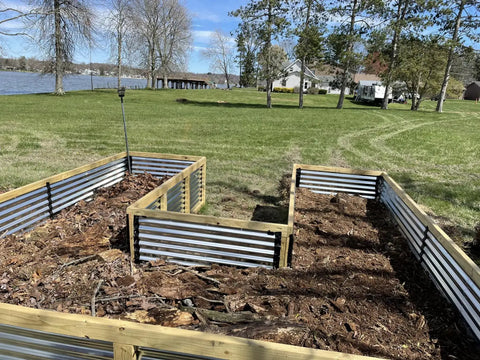
Even a small raised bed or container garden introduces the basics: soil preparation, watering schedules, pest management, and the patience required to wait for results. It is a low-stakes way to find out whether working with plants holds your attention over months, not just days.
Take a Course or Workshop
Many agricultural colleges, extension services, and farming organizations offer short courses in market gardening, soil health, or small-scale livestock management. These provide both knowledge and a realistic picture of what professional farming involves.
Talk to Working Farmers
Ask farmers directly about their income, their hardest months, what they wish they had known, and what they would do differently. Most are willing to talk honestly. Their answers will be more useful than any idealized account of rural life.
Work Part-Time on a Farm While Employed
If possible, arrange weekend or seasonal work on a local farm before making any permanent decisions. This tests both your physical stamina and your genuine interest when the novelty has worn off.
Financial Planning and Income Uncertainty
Financial concerns are a strong reason to approach a farming career change slowly. Farm income can vary with production, markets, operating costs, and weather.
Before leaving employment:
- Set a personal runway. Calculate essential living costs and choose a savings target based on your household, obligations, risk tolerance, and transition plan.
- List startup and recurring costs. Depending on the operation, these may include land rental, seeds, tools, water, insurance, transport, and market fees.
- Test possible sales channels. Direct sales, subscriptions, farm stands, and wholesale relationships have different costs, demand patterns, and requirements.
- Research local support. Training, land-access programs, grants, or agricultural finance may exist, but eligibility and terms vary. Treat loans as obligations, not free support.
- Keep outside income when useful. Part-time or seasonal work can reduce pressure while skills, customers, and records develop.
The purpose of planning is not to predict every result. It is to understand how long you can absorb lower-than-expected income and what conditions would make you pause or change course.
Physical Demands, Weather, and Seasonal Workload
Farm tasks may involve lifting, bending, kneeling, repetitive motion, and outdoor exposure. The mix varies by farm, crop, season, equipment, and role. Build capacity gradually, learn safe techniques, and include recovery in the plan.
Workloads may rise sharply around planting, harvest, or severe weather. Heat, cold, rain, drought, and storms can affect both working conditions and production. A trial period should include ordinary difficult days—not only pleasant visits—so the decision reflects the actual work.
Land Access: Renting as a Starting Point
Owning farmland is not a prerequisite for starting a farming career. Renting land is a common and practical starting point, particularly for people who are still testing whether farming is the right long-term path.
Renting offers flexibility. If the land does not suit your crops, or the location does not work, you are not locked in. It also requires less upfront capital than purchasing, which matters when you are still building income and experience.
When evaluating rental land, consider soil quality, water access, proximity to markets, and the terms of the lease. A short-term lease gives flexibility but limits how much you can invest in improving the land. A longer lease gives stability but requires more confidence in the location and the relationship with the landowner.
Land access programs, agricultural land trusts, and beginning farmer networks in many regions can help connect new farmers with available land. These resources are worth researching early in the planning process.
Community and Food Relationships
In the narrator’s experience, gardening and rural life changed the way community and food were felt. Neighbors sharing soup made with ingredients from nearby farms connected a meal to seasons, work, and nearby growers.
That experience is meaningful, but it is not automatic or universal. Rural relationships are built through reliability, reciprocity, privacy, and time. Anyone considering a move should learn how the local community actually works instead of assuming it will immediately replace an office social network.
A 90-Day Exploration Plan
If you are seriously considering a move toward farming, the following 90-day plan is designed to help you gather real information without making any irreversible decisions.
Days 1–30: Research and Honest Self-Assessment
- List what you genuinely dislike about your current work — and be specific. Is it the work itself, the environment, the schedule, or the lack of meaning?
- Research farming models that interest you: market gardening, small-scale livestock, mixed farming, or community-supported agriculture.
- Read accounts from farmers who have been doing it for five or more years, not just those in the first flush of enthusiasm.
- Calculate your current monthly expenses and identify what a realistic minimum income would need to be.
Days 31–60: Hands-On Testing
- Volunteer on a local farm for at least two full weekends.
- Start a small garden — even containers on a balcony count as a starting point.
- Attend a farmers' market as a visitor and talk to vendors about their experience.
- Identify one course, workshop, or extension program you could take in the next six months.
Days 61–90: Planning and Decision-Making
- Review what you learned from the hands-on testing. Did the physical work feel sustainable? Did you enjoy it when it was hard, not just when it was pleasant?
- Draft a basic financial plan: savings runway, estimated startup costs, and potential income sources.
- Talk to at least two working farmers about their first three years.
- Decide on a next step — which might be another season of testing, a part-time transition, or a longer-term plan — but not necessarily resignation.
Decision Signals and Warning Signs
After a period of honest testing, certain signals can help clarify whether a farming career change makes sense for you specifically.
Signals That the Direction May Be Right
- You enjoyed the physical work even when it was tiring and unglamorous.
- You found yourself thinking about farming problems and solutions outside of farming hours.
- The slower pace and seasonal rhythm felt grounding rather than frustrating.
- You connected with the farming community and felt motivated to be part of it.
- You have a realistic financial plan that does not depend on immediate profitability.
Warning Signs Worth Taking Seriously
- You are primarily motivated by escaping your current job rather than by genuine interest in farming.
- The physical demands felt unsustainable after even a short period of testing.
- You found the isolation or slower pace difficult rather than restorative.
- Your financial situation does not allow for a period of reduced or uncertain income.
- You have not yet spent meaningful time on a working farm in any capacity.
These are not absolute rules. They are prompts for honest reflection. The goal is to make a decision based on real experience rather than an idea of what farming might be like.
Frequently Asked Questions
Is it realistic to leave a stable office job for farming?
It is realistic for some people in some circumstances, but it requires careful preparation. The transition is most likely to succeed when it is planned over time, tested before commitment, and supported by a realistic financial plan. It is not realistic to expect farming to immediately replace a professional salary or to be free of stress.
What skills from office work are actually useful on a farm?
Financial management, project planning, communication, and problem-solving all transfer well. The specific tools change, but the underlying disciplines — tracking costs, managing time, adapting to changing conditions — are directly applicable to running a small farm operation.
Do I need to own land to start farming?
No. Renting land is a common and practical starting point for new farmers. It requires less upfront capital and offers flexibility while you are still learning. Many successful small farmers begin on rented land and either continue renting or purchase later once they have established income and clarity about what they need.
How long does it take to make a farming career financially viable?
There is no reliable universal timeline. It depends on the farming model, land arrangement, startup costs, market demand, production results, and the household’s required income. Track actual costs and sales, review them by season, and keep outside income if the numbers do not yet support a full transition.
What if I try farming and decide it is not for me?
That is a valid outcome, and it is one of the reasons testing before resigning is so important. Office skills remain valuable. Many people who explore farming return to professional careers with a clearer sense of what they want from work, a stronger connection to food and community, and skills they would not have developed otherwise. The exploration itself has value even if the destination changes.
Related collection
Explore Related Collections
Browse culinary and botanical collections related to this topic.
Browse Ingredient CollectionsProducts and collections are presented for general ingredient, culinary, botanical, craft, or gardening use. Content on this site is educational only and is not medical advice.
Leave a comment