

Rural Life in Diên Khánh, Vietnam: Roads, Farms, and Shared Meals
Team Rosie made one early-morning visit to Diên Lâm commune, Diên Khánh district, Vietnam. This article is a record of that single visit — what we saw, what we were told in broad terms, and where the limits of a short trip make it impossible to draw wider conclusions. It is not a portrait of the district, and it does not speak for the people who live there.
The Road After Rain
The road into the farming areas of Diên Lâm commune was unpaved and, on the morning of our visit, muddy from rain the night before. Puddles had collected in the lower sections of the track, and the surface was soft enough that riding required care and reduced speed. We stopped several times to assess the ground ahead before continuing.
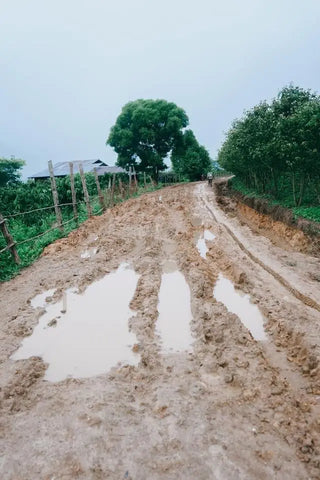
Along the road we passed bamboo and ponds where ducks were moving around the water's edge. We are not going to describe the air, the temperature, or compare conditions to anywhere else — we did not record those details at the time, and adding them now would be invention.
What the road did make clear is that rain changes the practical difficulty of reaching these areas. That is a logistical observation, not a claim about the district's infrastructure in general. We saw one road, on one morning, after one night of rain. Conditions on other roads, in other seasons, or after different amounts of rainfall would vary — this visit cannot speak to any of that.
What We Saw on the Farms
The farming areas we passed through and briefly stopped at included vegetable plots, a chicken enclosure, a pig shelter, and cattle in a field. We could not identify every crop from a distance, and we did not ask about land ownership, yields, or household income. We are not in a position to characterise the economic situation of the people whose land we passed — that would require far more than a morning visit and far more than casual observation.
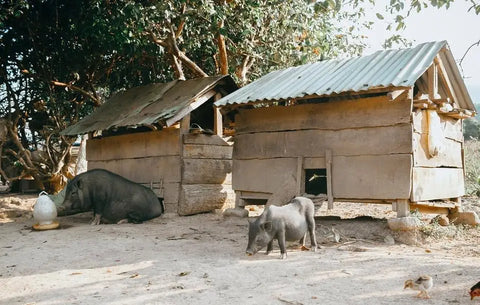
We are also not going to describe the farms as typical of the district, or the livestock as representative of how animals are kept here more broadly. What we saw was what was visible from the road and from the areas where we stopped. We did not enter any farm without being invited.
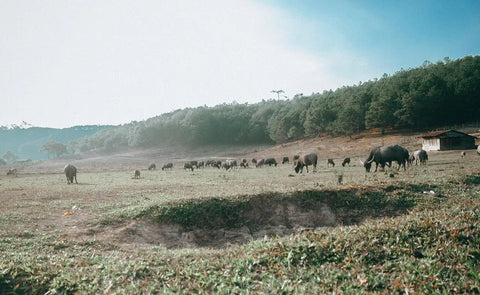
The presence of vegetables, chickens, pigs, and cattle on the same land suggests mixed agricultural use, but we cannot confirm whether this is the norm in Diên Lâm commune, whether the land is owned or leased, or how production is distributed. Those are questions this visit did not answer.
Transport and Weather as Practical Constraints
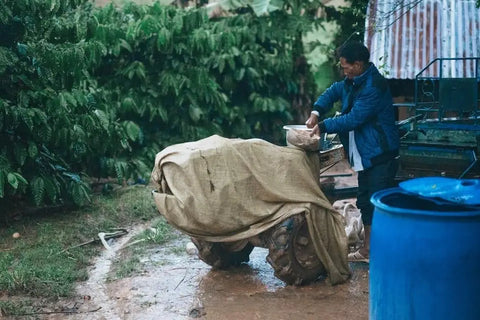
During the visit, we saw a person covering or securing equipment in the rain. The exact nature of the equipment was not clear to us. The action was practical — protecting something from water — and we have nothing further to add about what the person was thinking, feeling, or intending beyond what the action itself showed.
We also saw one motorcycle loaded with wooden crates on the muddy track. That observation does not establish how people generally travel, what vehicles are available, or what the rider thought about the conditions.
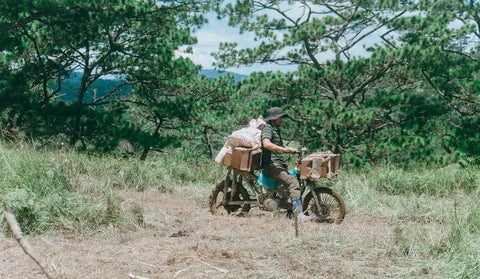
Rain and unpaved roads create practical constraints for anyone moving through this area — visitors and residents alike. That is the extent of what we can say from observation. We are not making claims about infrastructure investment, historical change, or how conditions compare to other parts of Vietnam.
Tea, Conversation, and What We Cannot Represent
At one point during the morning, we were invited into a home for tea. We accepted. The people we met shared local stories with us — the source article describes it this way, and we are not going to add detail that was not recorded at the time. We do not know exactly what was discussed, how much we understood, or how accurately the conversation was captured in our notes.
We are not going to use that one exchange to make claims about the values, outlook, or daily experience of people in Diên Khánh district more broadly. One household's hospitality is one household's hospitality. It tells us something about that morning and those people — it does not tell us about the district.
What we can say without overreaching: the invitation was extended, we accepted, tea was served, and stories were shared. We left. That is the honest account of what happened.
Foods Seen and Described
The source describes rice, garden vegetables, pond fish or shrimp, and free-range chicken. It does not confirm preparation, taste, seasoning, or whether Team Rosie ate them, so this account does not add those details.
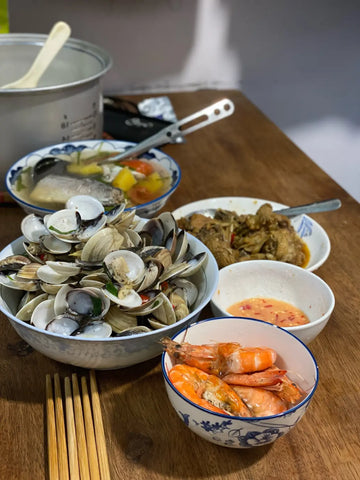
We are also not going to describe this food as healing, therapeutic, or spiritually restorative. A meal is a meal. Attaching wellness language to the everyday food of people who are simply eating does a disservice to both the food and the people. The foods described — rice, garden vegetables, pond fish or shrimp, free-range chicken — are straightforward and worth describing on their own terms, without embellishment.
Observation vs. Interpretation: A Quick Reference
The table below separates what this visit directly observed from claims that would go beyond the evidence. We include it because travel writing frequently blurs this line, and we want to be explicit about where ours sits.
| What We Observed | What We Are Not Claiming |
|---|---|
| Muddy unpaved road with puddles after overnight rain | That roads here are always difficult, or that infrastructure is underdeveloped |
| Bamboo and ponds with ducks along the road | That the landscape is untouched, timeless, or representative of the district |
| Vegetable plots, chickens, pigs, and cattle on farming land | That this is the typical or only farming model in Diên Lâm commune |
| Person covering equipment during rain | What that person was thinking, feeling, or intending |
| Motorcycle loaded with wooden crates on the muddy track | That motorcycles are the primary transport, or anything about the rider's circumstances |
| Invitation into a home for tea and local stories | That all residents are welcoming to visitors, or what was specifically discussed |
| Foods described as rice, garden vegetables, pond fish or shrimp, free-range chicken | That Team Rosie ate the meal, or that the food has therapeutic properties |
Responsible Rural Travel: Questions Worth Asking Before You Go
If you are considering a visit to rural farming areas in Diên Khánh district or similar areas in Vietnam, the following questions are worth working through before you arrive. They are not a checklist of rules — they are a decision framework for thinking through whether and how a visit is appropriate.
Have you asked permission before photographing people?
Ask explicit permission before photographing people on their land, in their homes, or at work. If the request cannot be communicated clearly, do not take the photograph. This article removes the original images of children and avoids identifiable portraits because consent could not be confirmed.
Are you arriving at a time that suits the people you are visiting, not just yourself?
Farms are workplaces. An early morning that suits a visitor's schedule may coincide with the busiest part of a farmer's day. If you are visiting without a prior arrangement, consider whether your presence is welcome at that moment, and be prepared to leave without seeing what you came to see if the timing is wrong.
If someone hosts you, are you prepared to compensate them fairly?
If a household offers tea, a meal, or time, that has value. Whether and how to offer compensation depends on the context and the relationship — there is no universal answer. What matters is that you think about it in advance rather than accepting hospitality and leaving nothing in return.
Are you prepared for the road conditions?
Unpaved roads in rural areas can change significantly after rain. Appropriate footwear, a rain layer, and a willingness to turn back if conditions are unsafe are basic preparation. Telling someone your route before you go is sensible if you are travelling independently in an unfamiliar area.
Are you carrying your waste out with you?
Carry out everything you carry in. This applies everywhere, and rural areas are not an exception.
Are you blocking the road or the work?
If you stop to photograph or look around, move fully off the track. A narrow muddy road with a stopped vehicle in the middle is an inconvenience to anyone who needs to pass — and on a working farm road, people do need to pass.
What This Visit Cannot Prove
A single morning in one commune of Diên Khánh district cannot tell you how most people in the district live, what they earn, what they think about their circumstances, or whether rural life here is better or worse than life elsewhere. We have tried throughout this article to be specific about what we saw and careful about what we conclude from it.
What we can offer is an honest account of one morning: the road was muddy, the farms were in use, bamboo and ducks were along the way, a person was managing equipment in the rain, a motorcycle was carrying crates, tea was offered and accepted, and foods including rice, vegetables, pond fish or shrimp, and free-range chicken were described to us. We left with more questions than we arrived with. That is probably the right outcome for a visit this short.
Frequently Asked Questions
Where is Diên Lâm commune?
Diên Lâm is a commune within Diên Khánh district, Vietnam. Beyond that, this visit did not verify specific geographic or administrative details, and we are not going to add them from general knowledge in a way that could be confused with first-hand observation.
What kind of farming did you see in Diên Lâm commune?
We observed vegetable plots, a chicken enclosure, a pig shelter, and cattle in a field. We cannot describe the full agricultural profile of the commune from a single morning visit, and we did not ask about crops, yields, or land use in any systematic way.
Is it appropriate to visit rural farming communities as a traveller?
It can be, if done with care. The key questions are whether your visit is welcome, whether you have asked permission before photographing people, whether you are prepared to compensate hosts fairly, and whether you are arriving at a time that works for the people you are visiting — not just for yourself. There is no single answer that applies to every situation.
What should I bring for a rural visit in this kind of area?
Based on what we encountered: footwear that can handle mud, a rain layer, and sufficient water. Beyond that, preparation depends on the specific route, season, and how you are travelling. Check conditions before you go and be prepared to adjust your plans.
Can one visit like this tell you what rural life in Diên Khánh is really like?
No. One morning in one commune gives you one morning's observations. The district has many communes, many households, and many different circumstances. If you want a fuller picture, the work of researchers, journalists, and people who actually live there is a far better starting point than a single travel account — including this one.
Related collection
Explore Related Collections
Browse culinary and botanical collections related to this topic.
Browse Ingredient CollectionsProducts and collections are presented for general ingredient, culinary, botanical, craft, or gardening use. Content on this site is educational only and is not medical advice.
Leave a comment