

Bitter Melon: Green vs Orange Fruit, Cooking & Seed Safety
Bitter Melon: Should You Harvest the Fruit Green or Wait Until It Turns Orange?
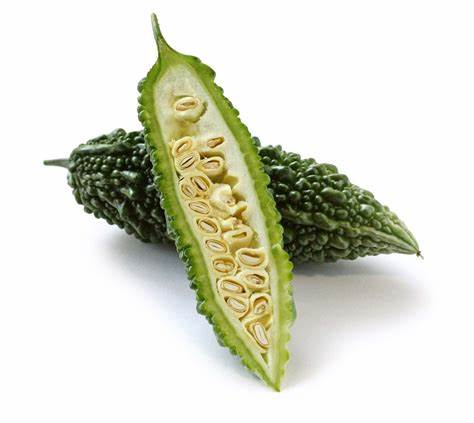
Short answer: For ordinary cooking, bitter melon (Momordica charantia, also called ampalaya, karela, goya and khổ qua) is generally harvested as a green or just slightly yellow, still-immature fruit. Cut it open, remove the seeds and cook the flesh as a vegetable. A mature yellow-orange fruit that splits to reveal reddish seed coverings is at a different stage, used by growers to assess seed maturity rather than the usual green-vegetable harvest. University of Florida IFAS explains the difference. Never mistake retail seeds sold for planting for food-grade fruit, supplements or medicine.
Important safety distinction: UF/IFAS's poisonous-plant reference cautions that swallowed seeds and ripe orange bitter melon fruit may make people and pets ill. Traditional food uses of selected green fruit do not establish that the hard seeds, a commercial seed packet or a homemade concentrated extract are safe. Keep planting seeds out of reach of children and pets.
What Actual Gardeners Are Asking
A March 2023 gardener asked which bitter melon variety they had and whether to harvest when green or wait for a larger orange specimen. Another February 2025 first-time grower asked if fruit that had started yellowing was ready. These are individual, user-written questions, not verified The Rike customer experiences or measured search demand. The practical answer is to use the current supplier cultivar information along with the green immature cooking stage described by UF/IFAS, rather than a universally fixed fruit size.
Green, Yellow and Orange: A Harvest Decision Table
| Fruit stage | What it means | Decision |
|---|---|---|
| Firm green | Typical immature vegetable stage | For a properly identified food-grown plant, harvest, remove seeds and cook the flesh |
| Just turning yellow | Ripening is beginning; stage varies by cultivar | Assess size, firmness and intended culinary use; do not depend on generic pictures |
| Fully orange or split open | Reproductive stage exposing red seed coverings | Do not use it as a routine substitute for green fruit; keep seeds away from children and pets |
| Dry planting seed packet | Stored propagation material | Plant only where appropriate; not a cooking, tea or diabetes-treatment ingredient |
Are Chinese and Indian Bitter Melon Types the Same?
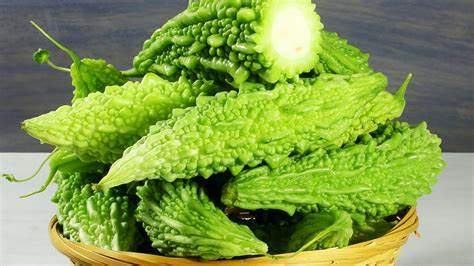
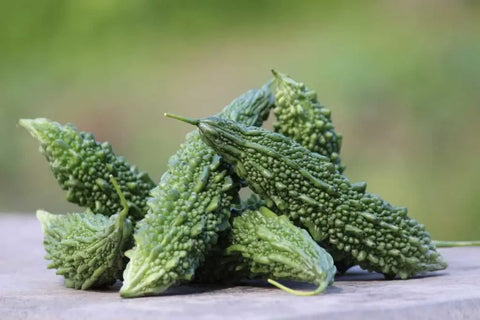
They are both commonly included within Momordica charantia, but individual cultivars differ. UF/IFAS describes longer, paler, more smoothly ridged Chinese-type fruits and often shorter, darker, more pointed or bumpy Indian-type fruits. There are exceptions. Color, photos and trade names are not independent genetic documentation. The Rike's catalog identifies its current SKU as the species Momordica charantia but does not independently establish a named Indian or Chinese cultivar or uniform fruit traits for the lot.
Grow Bitter Melon from Seed: The Parts That Matter
- Check your climate and rules. This is a frost-sensitive tropical/subtropical climbing vegetable. UF/IFAS warns it can escape cultivation in parts of Florida, so prevent seed spread where it could become weedy.
- Keep the germination environment warm and evenly moist. UF/IFAS describes hard seed coats and a warm-soil range around 60–95°F, with delayed emergence when conditions are too cool or dry. No current-lot germination percentage has been independently tested here.
- Provide drainage and trellis space. These vines can be long and branchy; strong support keeps fruit off wet soil.
- Look for male and female flowers. The female has a small fruit structure behind the bloom, and bees or other pollinators normally transfer pollen. Poor pollination can mean flowers without mature fruit.
- Inspect the developing fruit often. For vegetable use, harvest before the customary fruit turns orange and splits. Do not assume all varieties reach the same length.
- Manage mature pods and volunteers. Do not distribute viable seed into unmanaged habitats or allow curious pets and children to eat seeds or split fruit.
Does Bitter Melon Treat Diabetes?
Bitter melon is a culinary vegetable with a history of traditional medicinal use, but it is not a substitute for insulin or diabetes medication. The Cochrane systematic review found the treatment evidence inadequate across four low-quality trials involving 479 participants. Memorial Sloan Kettering similarly advises that clinical evidence remains limited and warns of possible additive low-blood-sugar effects with insulin and glucose-lowering drugs. Concentrated preparations and seed ingestion carry additional risks. Pregnant people and anyone taking relevant medicines should obtain individualized medical advice rather than using bitter melon to self-medicate.
Laboratory results for extracts are not a tested health benefit of a cooked serving of immature fruit, and neither exposure is a clinical study of a merchant's propagation seeds. Do not make a “detox,” cancer, inflammation or blood-sugar cure claim from the existence of a seed catalog listing.
Buying Bitter Melon Seeds for Planting
The Rike 30 Bitter Melon Seeds for Planting for planting, not ready-to-eat bitter melon or medicinal preparations. Fruit appearance, cultivar and germination vary; consult the packet and local growing guidance.
This listing is for seeds to plant, not green edible bitter melon, a live vine, a food-grade seed snack or an approved herbal or glucose-lowering supplement.
Frequently Asked Questions
Are green bitter melon fruits and orange fruits interchangeable?
Not for normal culinary harvest. UF/IFAS describes green or slightly yellow immature fruit for cooking after removing seeds, and cautions about fully ripe orange fruit and seed ingestion. Confirm plant identity before preparing food.
Can I eat seeds from this retail planting packet?
No food-grade claim is established. The packet is for planting, and seed ingestion has safety concerns. Keep it away from children and pets.
Will the seeds produce a specific Chinese or Indian bitter melon?
The exact cultivar and fruit shape are not verified. Ask for current supplier lot documentation when characteristics matter.
Can bitter melon replace a diabetes prescription?
No. The evidence is insufficient for that purpose and there can be drug interactions. Seek qualified medical care.
Sources and Limits
- UF/IFAS: Bitter Melon—an Asian Vegetable Expanding in Florida — plant identity, seeds, cultivation, harvest and ecology
- UF/IFAS: Poisonous and Invasive Plants in Florida Residential Landscapes — ingestion cautions
- Cochrane: Momordica charantia for Type 2 Diabetes Mellitus — insufficient treatment evidence
- Memorial Sloan Kettering: Bitter Melon — medical and medication limitations
Related collection
Explore Seed Collections
See seed varieties and growing-related collections.
Browse Seed CollectionsProducts and collections are presented for general ingredient, culinary, botanical, craft, or gardening use. Content on this site is educational only and is not medical advice.
Leave a comment