

Permaculture Practices for Urban Resilience
Vertical gardening for small urban spaces
Vertical gardening is one of the most practical ways to grow food in cities where yard space is limited or nonexistent. In extension guidance, it generally means using trellises, cages, poles, strings, nets, hanging systems, or wall-mounted planters to support plants upward instead of letting them sprawl across the ground. That makes it especially useful for patios, balconies, stoops, courtyards, and tiny backyards where every square foot has to work harder. (NC State Extension)
The main advantage is simple: vertical systems turn unused airspace into growing space. NC State notes that this approach is particularly suited to gardeners with small gardens, while Oregon State points out that vining crops such as pole beans, peas, and cucumbers are especially well adapted to trellises and other upright supports. Vertical growing can also make harvesting and pest monitoring easier, since fruit and foliage are lifted off the ground instead of vanishing into a leafy floor-level mess. (NC State Extension)
It also improves plant health when done well. University of Minnesota guidance says trellises provide better airflow through the canopy, and Oregon State notes the same benefit in vertical vegetable systems, which can help reduce some disease pressure. That does not make a trellis magical, sadly, but it does mean dense urban plantings can be managed more cleanly when vines and tall crops are trained upward rather than packed into a wet, tangled thicket. (University of Minnesota Extension)
For beginners, the best vertical systems are usually the least complicated ones: a trellis behind a large container, a tomato cage in a pot, a railing planter for herbs, or a wall-mounted setup for shallow-rooted greens. Penn State’s small-space guidance emphasizes matching plants to the site, since a sunny south-facing porch behaves very differently from a covered east-facing balcony. Light matters especially for edibles. Oregon State recommends at least about six hours of direct sun for vegetables, and Minnesota notes that most culinary herbs also need six hours or more to grow well. (Penn State Extension)
The most reliable crops for vertical growing in urban spaces are the ones that naturally climb or stay compact. Pole beans, peas, cucumbers, and some tomatoes are the obvious candidates for trellises or cages, while lettuce, herbs, strawberries, and other shallow-rooted plants work well in window boxes, stacked planters, or hanging containers. Oregon State and Penn State both note that many vegetables can succeed in containers, including lettuce, tomatoes, peppers, radishes, kale, chard, spinach, strawberries, and herbs, and OSU specifically recommends large containers for bigger crops, with tomatoes, peppers, and eggplant needing about a five-gallon container. (OSU Extension Service)
That last point is where beginners usually go wrong. Vertical gardening saves ground space, but it does not eliminate root-space needs. A wall pocket may be fine for thyme or lettuce, but it is not a serious home for a tomato plant no matter how inspirational the social media caption sounds. OSU’s container guidance stresses choosing the right container size and using quality potting soil with good drainage, while Minnesota notes that container plants often need frequent watering and benefit from mulch to reduce evaporation and moderate soil temperature. In hot weather, some containers may need water more than once a day. (OSU Extension Service)
A good small-space vertical garden usually mixes two strategies. First, grow climbers upward on the strongest support you can safely provide. Second, use containers and pockets for smaller, quick-turnover crops. A practical setup might be one trellis pot with cucumbers or pole beans, one caged cherry tomato in a large container, a railing box with basil and parsley, and a shallow planter for lettuce or spinach. That kind of system uses height, keeps maintenance manageable, and avoids the common urban-gardening mistake of trying to force one structure to do everything at once. (OSU Extension Service)
There is also a climate and comfort angle. Penn State notes that planting on vertical surfaces, including trellised vines and living walls, can help cool a house in summer. In tiny urban spaces, that means vertical gardening can do more than produce food. It can also soften heat, shade hard surfaces, and make a balcony or courtyard feel less like a decorative frying pan. (Penn State Extension)
What makes vertical gardening so teachable is that the design logic is visible right away. You can see where light hits, where vines want to climb, where containers dry out fastest, and which crops genuinely belong in small spaces. Done well, it is not just a space-saving trick. It is a way of designing an urban garden to be more productive, more manageable, and less dependent on the fantasy that sprawling plants somehow take up no room. Humans do love pretending physics is optional. (Penn State Extension)
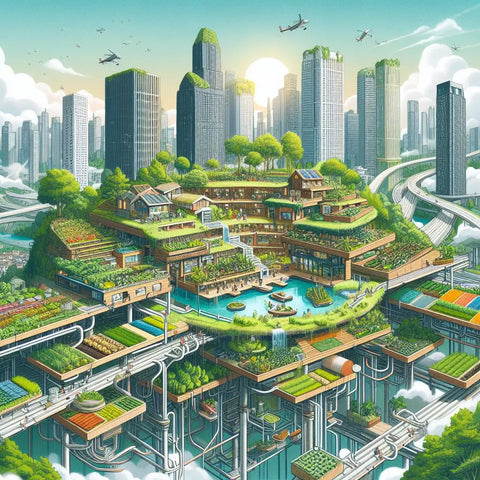
Community gardens for neighborhood food security
Community gardens can strengthen neighborhood food security by doing more than producing vegetables. At their best, they create a local system for fresh food access, practical growing skills, shared infrastructure, and community ties in places where supermarkets may be far away, expensive, or unreliable. USDA now describes urban agriculture, including community gardens, as providing critical access to healthy food for local communities, along with green space and closer community ties, and notes that these projects can support training, infrastructure, and climate-resilient practices. (USDA)
That matters because food security is not just about whether food exists somewhere in a metro area. It is about whether people can get affordable, nutritious food consistently and with dignity. NIFA’s Community Food Projects program frames the problem in exactly those terms, emphasizing food and nutrition security, especially in historically ignored communities, and requiring projects to include food-insecure residents in planning, design, implementation, and evaluation. Its goals combine immediate food access with longer-term self-reliance, which is a much smarter model than pretending one heroic tomato patch will solve structural hunger. (Nation Institute of Food and Agriculture)
The food benefit is real, even if it is not magic. A 2023 randomized controlled trial found that community gardeners significantly increased their vegetable intake from baseline to harvest, and related reporting on that trial found higher fiber intake, more physical activity, and lower stress and anxiety among people who started gardening. A 2022 systematic review likewise found community gardening associated with higher fruit and vegetable intake and positive psychosocial and community outcomes. So the case for gardens is not only “free produce.” It is also that they help people eat more fresh food and build routines around it. (PubMed)
Still, community gardens work best as part of a broader neighborhood food strategy, not as a substitute for it. A 2025 review found that participation in community gardening may have little to no effect on household food insecurity on its own, which is a useful reality check for anyone trying to solve poverty with basil. The strongest models therefore pair gardens with education, distribution, and local support systems. Programs like Seed to Supper are built around exactly that logic, combining beginner gardening instruction with food literacy, resiliency, and supportive social networks to strengthen both individual and community food security. (PMC)
This is why the most effective community gardens are organized less like hobby plots and more like neighborhood infrastructure. They often include shared tools, compost, water access, culturally relevant crops, seedling support, and clear plans for how food is used, whether that means household harvests, pantry donations, sliding-scale farm stands, or community meals. NIFA’s grant framework explicitly favors comprehensive, sustainable projects that improve access to nutrient-dense food, connect residents to assistance programs, and build self-reliance over time, while USDA’s urban agriculture programs support training, collaboration, and local production capacity. (Nation Institute of Food and Agriculture)
Safe siting matters too, especially in older urban neighborhoods. EPA warns that communities converting lots to urban agriculture should assess sites for environmental contaminants before growing food, and ATSDR’s soilSHOP materials highlight lead and other contaminants as a real risk in urban soils. In practice, that means testing soil, reviewing site history, and using raised beds, clean imported soil, containers, or other protective strategies where needed. There is nothing poetic about accidentally gardening in legacy contamination. (US EPA)
What makes community gardens so important for neighborhood food security is that they address fragility on several levels at once. They can increase fresh-food access, teach people how to grow and cook what they eat, create social networks that make local food systems more resilient, and turn vacant or neglected land into something useful. They will not replace wages, grocery stores, or nutrition programs, because reality remains annoyingly real. But as neighborhood-scale infrastructure, they can make communities less dependent on distant, brittle food systems and more capable of feeding themselves when supply, price, or access starts wobbling. (USDA)

Vertical gardening in small-city spaces
Vertical gardening is one of the most practical ways to grow food in compact city settings because it turns walls, railings, fences, and trellises into usable growing space instead of relying only on ground area. Extension guidance recommends vertical growing for space-limited gardens because crops like pole beans, cucumbers, peas, and tomatoes can be trained upward rather than allowed to sprawl, which frees room for other plants. (University of Maryland Extension)
The basic idea is simple: put climbers on sturdy supports and reserve containers, boxes, or pockets for smaller crops. University of Maryland’s vegetable-planning guidance says to “go vertical” where space is tight, and Kansas State notes that lifting plants off the ground improves airflow and makes harvesting easier. Wisconsin Extension adds that vertical supports can reduce disease pressure, improve fruit quality, and make better use of each square foot. (University of Maryland Extension)
This works especially well in small-city spaces because containers are portable and adaptable. University of Maryland notes that containers fit small spaces and allow more control over light exposure, pot size, and growing conditions, while Minnesota points out that even a balcony, stoop, or tiny patio can support productive container gardening. So the real system is usually a hybrid: one or two large pots with trellised crops, plus smaller planters for herbs or greens. (University of Maryland Extension)
The best crops for vertical setups are the ones that naturally climb or tolerate support well. Kansas State specifically recommends tomatoes, pole beans, peas, cucumbers, melons, squash, and gourds for vertical growing, while Wisconsin Extension highlights pole beans, peas, tomatoes, cucumbers, gourds, melons, and squashes as strong candidates. Not every variety is equally suited, though. UC Master Gardeners advise choosing compact, patio, bush, or dwarf varieties for small spaces rather than oversized types bred to dominate an entire bed like botanical tyrants. (K-State Extension)
Light and root space still matter, which is the part people keep trying to negotiate with reality. Maryland says vegetable gardens should get at least six hours of full sun, ideally more, and UNH Extension warns that container plants fail when pots are too small or the potting medium is too dense. Their guidance specifically notes that many tomatoes need at least a five-gallon container and that soilless mixes work better than heavy topsoil in small containers. So a wall pocket may be fine for thyme or lettuce, but it is not a serious home for a tomato plant no matter how inspirational the photo caption is. (University of Maryland Extension)
For beginners, the most reliable setup is usually modest: one strong trellis or cage, one or two large containers for major crops, and a few smaller boxes for quick, shallow-rooted plants. A practical example would be a trellised cucumber or pole bean pot, one caged cherry tomato in a large container, and a railing planter with basil, parsley, lettuce, or scallions. That kind of arrangement follows the extension advice on using vertical supports to save space while keeping containers manageable and site-appropriate. (University of Maryland Extension)
What makes vertical gardening so useful in small-city spaces is that it solves several problems at once. It increases production per square foot, improves access and airflow, and lets growers adapt tiny sites instead of waiting for the mythical day they acquire a yard. Done well, it is not a gimmick. It is a practical design response to the fact that urban gardening usually has one luxury in abundance and one in short supply: vertical space and actual ground. (K-State Extension)
Edible landscaping for front yards and sidewalks
Edible landscaping for front yards and sidewalk strips turns highly visible urban space into something both attractive and productive. Rather than hiding food crops in a backyard corner, this approach mixes fruiting shrubs, herbs, edible flowers, perennial vegetables, and compact annuals into ornamental-style plantings. Oregon State defines edible landscaping as the use of food-producing plants in the residential landscape, combining fruit and nut trees, berry bushes, vegetables, herbs, edible flowers, and ornamental plants in aesthetically pleasing designs.
That makes it especially useful in cities where the front yard or the strip between sidewalk and street may be the sunniest ground available. A good edible landscape is not just a vegetable patch dropped in the wrong place. It is designed like a real landscape, with structure, seasonality, and visual order. OSU notes that these plantings can range from partly edible to entirely edible, while UC Marin Master Gardeners recommend using edibles in place of ornamentals or integrating them among existing ornamentals, with examples like blueberries and artichokes as ornamental shrubs, blackberries or raspberries as hedgerows, and herbs as borders.
Front yards are usually the easiest place to make edible landscaping look intentional. Repetition, edging, and plant layering matter more than trying to cram every possible crop into one bed like a panicked survivalist. A clean border of thyme, chives, or parsley can frame a bed of kale, lettuces, calendula, and peppers. Blueberries, currants, dwarf fruit trees, and artichokes can provide the larger architectural layer. UC Marin also notes that if space is tight, high-yield crops such as herbs, parsley, carrots, and beets make better sense than sprawling low-yield plants like pumpkins, corn, or watermelon. (UC Agriculture and Natural Resources)
Sidewalk strips need a slightly tougher design mindset. These spaces are often narrow, hot, compacted, and exposed to reflected heat, foot traffic, and road salt or splash. Penn State’s “hellstrip” guidance describes these overlooked sidewalk strips as places that can become valuable planted assets with smart design and durable plant choices, and Minnesota Extension similarly notes that boulevard-type spaces need plants that tolerate lower-maintenance, somewhat tougher conditions and benefit from clear edges that help keep creeping plants in place. (Penn State Extension)
That means the best edible choices for sidewalk-adjacent areas are usually sturdy, tidy, and perennial or self-renewing. Herbs are especially useful here. Low-growing thyme, oregano, chives, garlic chives, and sage can handle a lot more exposure than tender salad greens. Strawberries can work as an edible groundcover in friendlier sites, while blueberries, serviceberries, currants, rosemary in mild climates, and artichokes can function as ornamental anchors in larger beds. The general edible-landscaping guidance from OSU and UC Marin supports this mixed strategy of shrubs, herbs, and ornamental-looking edibles rather than relying only on classic row-garden crops.
The practical limits matter. Most edible plants still need good soil and enough sun to justify the trouble. OSU notes that most fruits and vegetables need about 6 to 8 hours of sun to produce well, and that plant size at maturity matters, especially in small spaces where dwarf or semi-dwarf trees and smaller shrubs are a better fit. Trellises, fences, and arbors can also help use vertical space in front-yard designs without turning the whole thing into a vine accident.
There is also a safety and site-history issue that matters more in front yards and sidewalk areas than people like to admit. Older urban soils may contain lead or other contaminants, especially near roads or older buildings. Oregon State advises testing soil if the site history is unknown and recommends raised beds or containers with uncontaminated mix for root crops and leafy greens where lead or other metals are a concern. It also recommends covering bare soil with mulch to reduce exposure to contaminated dust. So yes, before planting sidewalk kale in an old city lot, do the dull responsible thing and find out what is in the soil. (OSU Extension Service)
Stormwater is another design opportunity. Front-yard beds and sidewalk plantings can do more than sit there looking worthy. Minnesota Extension notes that rain gardens collect runoff from hard surfaces like roofs, driveways, walkways, and parking lots, allowing water to soak in, reducing erosion, and filtering pollutants. A long, narrow rain-garden shape can work between structures such as a house and sidewalk, which makes edible-adjacent front-yard planting especially useful where runoff is already a problem. For food crops, the safest approach is usually to keep the wettest stormwater-management zone focused on ornamentals or tough perennials, then place your more intensively harvested edibles in cleaner, better-amended beds nearby. (University of Minnesota Extension)
The best edible front-yard landscapes end up looking less like a rebellion against ornament and more like a smarter version of it. They use neat edges, repeated plant forms, attractive shrubs, flowers for pollinators, and compact food plants people actually harvest. Done well, edible landscaping softens streets, makes better use of precious urban land, and produces herbs, berries, greens, and fruit in spaces that would otherwise grow little but lawn and civic disappointment.
Rain gardens and bioswales for homeowners
Rain gardens and bioswales are two of the most practical ways homeowners can manage stormwater on-site instead of sending it racing off hard surfaces and into streets, storm drains, or basements. EPA describes rain gardens as small, shallow, planted depressions that collect runoff and let it temporarily pond and soak in, while bioswales are vegetated channels that slow, filter, and move stormwater through a site. Both are forms of green infrastructure, meaning they use soil, plants, and shallow land shaping to manage rain where it falls. (US EPA)
For homeowners, the difference is mostly about shape and function. A rain garden is usually a basin or pocket that captures water from a downspout, driveway, or yard area and holds it briefly so it can infiltrate. A bioswale is usually longer and narrower, designed to guide runoff through a planted strip while slowing and cleaning it along the way. EPA’s older green-infrastructure guidance even describes bioswales as essentially rain gardens adapted to long, narrow spaces such as curbside strips, which makes them especially useful along driveways, property edges, and side yards. (US EPA)
The main benefit is not just flood reduction, though that part tends to get people’s attention. These systems also reduce runoff volume and speed, improve infiltration, and help trap sediment and pollutants before they reach local waterways. EPA’s stormwater materials note that on-lot treatments such as rain gardens and bioswales can reduce peak flow and lower pollutant export, and Oregon State Extension says vegetative systems like rain gardens and bioswales can enhance water quality, slow water movement, and encourage percolation. (US EPA)
The most important design rule is siting. A rain garden or bioswale should intercept runoff from roofs, patios, lawns, and driveways, but it should not be placed where it threatens a building foundation or sends overflow somewhere unsafe. EPA’s homeowner rain-garden guidance centers placement and drainage considerations, and Pennsylvania State Extension describes rain gardens and bioretention cells as stormwater practices intended to capture runoff from impermeable surfaces, not as random wet spots dug wherever space happens to exist. In plain terms: put them where water naturally goes, but not right against the house like you are trying to speedrun a moisture problem. (US EPA)
For most homeowners, a rain garden makes sense where a downspout can be redirected into a shallow planted basin or where runoff already collects in a manageable part of the yard. A bioswale makes more sense where water needs to move across the property in a controlled way, such as along a driveway edge, between a patio and yard, or through a long side-yard strip. EPA’s green-infrastructure overview and OSU Extension both frame these as site-scale tools for slowing, filtering, and infiltrating stormwater rather than sending it untreated off-site. (US EPA)
Planting should match moisture zones. The deepest or lowest part of a rain garden typically handles the wettest conditions after storms, the side slopes deal with intermittent moisture, and the outer rim stays comparatively drier. The same logic applies to bioswales, where plants need to tolerate both brief wet periods and ordinary dry spells. EPA and extension sources consistently treat these systems as vegetated practices, not gravel pits with branding, so plant choice matters for infiltration, soil stability, and long-term maintenance. (US EPA)
Maintenance is fairly ordinary if the design is sound. Homeowners need to keep inlets and overflow paths clear, replace mulch as needed, pull invasive weeds, and make sure the planted area is still draining properly after storms. EPA’s community green-infrastructure materials specifically note that residents can help keep these systems functioning by removing trash and debris and maintaining vegetation, which is a polite bureaucratic way of saying they only stay effective if someone occasionally pays attention. (US EPA)
The broader homeowner appeal is that rain gardens and bioswales are both useful and visible. They can turn a soggy patch, bare drainage strip, or runoff-prone edge into planted landscape that reduces erosion, manages water, and adds habitat and curb appeal at the same time. That is why EPA repeatedly lists them among its core green-infrastructure practices for homes and neighborhoods. They are not decorative extras. They are practical landscape infrastructure disguised as plants, which is one of the few genuinely clever things humans have done with suburban yards. (US EPA)
Related collection
Explore Related Collections
Browse culinary and botanical collections related to this topic.
Browse Ingredient CollectionsProducts and collections are presented for general ingredient, culinary, botanical, craft, or gardening use. Content on this site is educational only and is not medical advice.
Leave a comment