

The Role of Experiential Learning in Urban Permaculture Projects
The Role of Experiential Learning in Urban Permaculture Projects
Balcony permaculture for renters
Tiny-space systems, container guilds, vertical growing.
Permaculture on a balcony is less “food forest” and more “small, stubborn ecosystem.”
Think in layers:
-
Canopy: trellised tomato, pole bean, cucumber
-
Shrub: peppers, dwarf eggplant
-
Herb layer: basil, thyme, parsley, chives
-
Groundcover: oregano, nasturtium, alpine strawberries
-
Root layer: radish, baby carrots, scallions
-
Support plants: marigold, alyssum, calendula, clover
Think in functions:
-
one plant for food
-
one for pollinators
-
one for pest confusion
-
one for soil cover
-
one for nutrient support
On a balcony, every container should do at least 2-3 jobs.
Best tiny-space systems
1. The “guild pot”
One large container, 40 to 60 cm wide, with a mini plant community.
Good pattern:
-
center: dwarf tomato or pepper
-
edge fillers: basil, chives
-
spillover: nasturtium or thyme
-
pollinator pull: alyssum
Why it works:
-
roots occupy different zones
-
foliage shades soil
-
herbs repel or confuse some pests
-
flowers bring beneficial insects
2. Vertical wall plus floor pots
Use height first, because horizontal space vanishes instantly once humans add a chair and call it a lifestyle.
Setup:
-
trellis or railing planter for climbers
-
shelves or plant ladder for herbs/greens
-
1-2 deep tubs on the floor for anchor crops
-
hanging pots only if weight and wind are manageable
Best vertical crops:
-
pole beans
-
cucumbers
-
small melons only if you hate yourself and enjoy rigging slings
-
peas
-
indeterminate cherry tomatoes
3. Salad conveyor
Fast turnover, shallow containers, constant harvest.
Grow in waves:
-
leaf lettuce
-
arugula
-
mizuna
-
spinach
-
radish
-
baby beet greens
-
cilantro
Sow a small patch every 1-2 weeks instead of one giant batch that all bolts at once.
4. Balcony micro-orchard, sort of
For sunny balconies:
-
dwarf fig
-
patio blueberry
-
dwarf citrus
-
alpine strawberry underplanting
-
thyme or clover as living mulch
This is less “orchard” and more “fruiting negotiation with a pot,” but it can work.
Container guild ideas
Tomato guild
Use a 15-25 gallon container if possible.
-
1 tomato
-
2-3 basil
-
1 chive clump
-
trailing nasturtium or thyme at edge
-
alyssum nearby
Functions:
-
food
-
shade
-
pollinators
-
pest distraction
-
better use of root zones
Pepper guild
-
1 pepper plant
-
scallions around edge
-
oregano trailing
-
marigold nearby
Peppers like warmth and don’t mind close herb neighbors.
Greens guild
In a wide shallow tub:
-
lettuce
-
radish
-
dill
-
cilantro
-
calendula at one corner
Fast, forgiving, and actually worth doing in small spaces.
Bean guild
-
pole beans on a trellis
-
lettuce or spinach below
-
nasturtium trailing
-
dill nearby
Beans give vertical yield and partial dappled shade underneath.
Strawberry guild
-
strawberries
-
thyme
-
chives
-
alpine strawberry mix
-
borage in separate nearby pot if you have room
Great for edges, rail planters, and stacked systems.
Vertical growing that actually works
Use:
-
trellis clipped to railing or wall
-
A-frame ladder shelf
-
stackable planters
-
hanging pocket planters for shallow-rooted herbs only
-
string supports from balcony ceiling only if allowed and secure
Avoid:
-
huge hanging baskets in windy balconies
-
unstable towers that dry out in four minutes
-
random Pinterest contraptions built from optimism and zip ties
Soil and fertility, renter edition
You are not building deep native soil. You are managing pot ecology.
Use:
-
high-quality potting mix
-
compost mixed in, but not dense garden soil
-
mulch on top: straw, shredded leaves, coco chips, or living mulch like thyme/clover in large pots
-
worm castings lightly and regularly
-
liquid feed during heavy fruiting
Best low-mess fertility loop:
-
kitchen scrap bokashi or countertop compost only if you’re actually consistent
-
simplest option is worm castings + compost tea or diluted organic liquid fertilizer
Water strategy
Balcony permaculture is mostly water management with garnish.
Do this:
-
saucers or sub-irrigated planters
-
self-watering boxes for tomatoes, cucumbers, peppers
-
mulch everything
-
group thirsty plants together
-
put drought-tolerant herbs in separate pots
-
water deeply, less often, instead of sad little surface sprinkles
Sun and wind mapping
Before planting, watch:
-
hours of direct sun
-
reflected heat from walls
-
wind tunnels
-
rain shadow under roof overhang
Rules:
-
6+ hours sun: tomatoes, peppers, beans, cucumbers, strawberries
-
4-6 hours: greens, herbs, dwarf roots
-
bright shade: mint, parsley, lettuce, Asian greens
Wind matters almost as much as sun. A balcony can turn basil into emotional confetti.
Best crops for renters
Most reliable:
-
basil
-
chives
-
parsley
-
thyme
-
lettuce
-
radish
-
scallions
-
cherry tomato
-
pepper
-
pole beans
-
nasturtium
-
alpine strawberry
Higher effort:
-
cucumber
-
dwarf eggplant
-
peas
-
blueberries
-
dwarf citrus
Usually not worth it unless you really want the challenge:
-
corn
-
potatoes in tiny pots
-
giant squash
-
full-size broccoli
-
anything that needs “just a bit more room”
A simple balcony layout
For a small sunny balcony:
-
back wall/railing: trellis with 2 bean or cucumber plants
-
one large tub: tomato guild
-
one medium pot: pepper guild
-
two window boxes: salad succession
-
one herb rail planter: thyme, chives, parsley, basil
-
one pollinator pot: alyssum, calendula, marigold
That gives food, flowers, height, and decent resilience without turning the balcony into a jungle lawsuit.
Renter-safe principles
-
use containers, not permanent fixtures
-
protect floors with trays or pot feet
-
check balcony weight limits before using many large wet containers
-
avoid water runoff onto neighbors below, because humans become very dramatic when dripped on
-
choose movable systems for seasonal sun shifts and lease survival
Easiest starter combo
If you want one low-risk setup:
-
1 cherry tomato in a large pot
-
basil + chives around it
-
nasturtium spilling over edge
-
1 trellis pot of pole beans
-
1 shallow salad box
-
1 herb box with thyme, parsley, oregano
-
1 flower pot with alyssum and calendula
That’s a real mini-ecosystem, not just random pots pretending to be a garden.
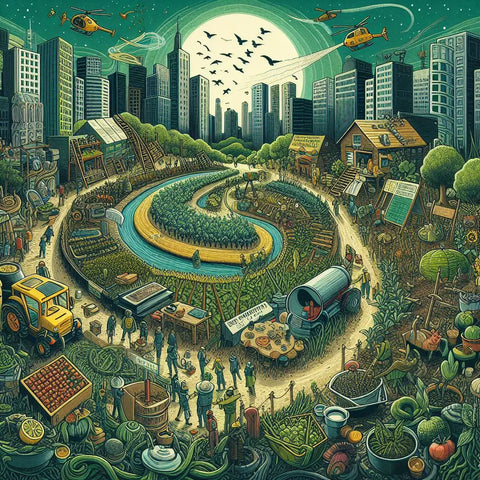
Raised bed permaculture for urban beginners
The article directly mentions raised beds as a hands-on learning activity.
Raised beds are one of the least chaotic ways for urban beginners to learn permaculture, which is nice, because most people try to begin by buying twelve seed packets and immediately inventing failure.
Why raised beds work so well
A raised bed gives you a small, controllable ecosystem:
- better soil control
- easier watering
- fewer compaction problems
- simpler weed management
- clear boundaries for planning guilds and crop rotation
For beginners, that matters more than ideology. You are not trying to recreate a forest in year one. You are trying to keep plants alive long enough to notice patterns.
Permaculture principles in a raised bed
Even a single bed can follow permaculture thinking:
Observe first
- Track sun, shade, wind, and water runoff before planting.
Stack functions
- A bed should produce food, protect soil, attract pollinators, and reduce pests.
Keep soil covered
- Use mulch, living groundcovers, and dense planting.
Favor diversity
- Mix crops, herbs, flowers, and roots instead of making a sad monocrop rectangle.
Build fertility in place
- Add compost, chop-and-drop trimmings, and seasonal cover crops where possible.
Best raised bed setup for urban beginners
A good starter size:
- 4 x 8 ft or 1.2 x 2.4 m
- about 10-12 in deep
That is big enough to matter and small enough that maintenance does not become a second job.
Use:
- untreated rot-resistant wood, metal, or another food-safe material
- high-quality soil mix with compost
- mulch on top once planted
Beginner-friendly planting pattern
Instead of rows, use zones inside the bed:
Back or north side
Put taller crops here so they do not shade everything else.
- tomatoes
- trellised beans
- cucumbers
- kale
Middle
Medium plants.
- peppers
- bush beans
- chard
- basil
Front or edges
Low growers and soil covers.
- lettuce
- thyme
- strawberries
- nasturtium
- alyssum
Corners or pockets
Useful support plants.
- marigold
- calendula
- chives
- parsley
- dill
Easy raised bed guilds
Tomato guild
- 1-2 tomatoes
- basil nearby
- chives or onions around them
- nasturtium trailing at edges
- alyssum for pollinators
This gives food, scent diversity, soil shade, and flower support in one bed section.
Greens guild
- lettuce
- radish
- cilantro
- dill
- calendula
Fast, forgiving, and useful for learning succession sowing.
Bean and cucumber guild
- trellised beans or cucumbers
- lettuce underneath
- nasturtium at the edge
- marigold nearby
This uses vertical space and creates partial shade for tender greens.
What to plant first
Best beginner crops for raised beds:
- lettuce
- radish
- bush beans
- cherry tomatoes
- basil
- chard
- scallions
- parsley
- nasturtium
- calendula
These give quick feedback, which beginners need. Nothing teaches faster than visible success or visible collapse. Gardening is generous that way.
Soil habits that matter most
Raised bed permaculture is mostly soil management pretending to be plant management.
Do this:
- add compost every season
- mulch after planting
- do not step in the bed
- leave roots in place after harvest when reasonable
- plant something in every season, even a cover crop or quick greens
Avoid:
- leaving bare soil
- over-tilling
- planting giant blocks of one crop
- cramming in more than the bed can support
Watering and maintenance
For urban beds:
- water deeply, not constantly
- mulch to reduce evaporation
- group thirsty plants together
- use drip irrigation or a soaker hose if possible
- inspect plants often, because pest problems are easier to stop early than to philosophize about later
A simple one-bed beginner plan
For one 4 x 8 bed:
- back: 2 tomatoes with basil and chives
- center: 1 pepper, 1 chard, 1 bush bean patch
- front: lettuce and radish succession
- edges: nasturtium and thyme
- corners: calendula or alyssum
That gives:
- vertical yield
- leaf crops
- root crops
- flowers
- pest confusion
- pollinator support
- decent use of space
Why raised beds are such a good learning tool
They make permaculture visible at human scale. You can actually see:
- which plants help shade soil
- where water dries out first
- which flowers bring insects
- how mixed planting behaves
- how compost changes growth over time
That is why raised beds are often recommended as a hands-on learning activity. They let beginners practice observation, diversity, soil care, and design without needing a whole yard or a dramatic faith-based commitment to homesteading.
Best beginner mindset
Do not aim for perfect design. Aim for:
- healthy soil
- dense planting
- mixed species
- covered ground
- steady observation
That is enough to start building a real permaculture habit.

Apartment composting for city households
Bokashi, worm bins, odor-free setups, beginner mistakes.
Apartment composting is basically the art of keeping food scraps from becoming landfill without turning your kitchen into a biology experiment your neighbors can smell.
For city households, the main goal is not heroic sustainability theater. It is a system you will actually keep using on a Tuesday when you are tired and holding a damp coffee filter.
Why apartment composting works
You do not need a yard to compost. You need a contained system, the right food inputs, and enough discipline not to dump random sludge into a bin and then act surprised when it smells like consequences.
Good apartment composting should be:
- compact
- low-odor
- easy to maintain
- tolerant of beginner mistakes
- realistic for your space and routine
For most city homes, the best options are bokashi or worm bins. Some people use both.
Bokashi for apartments
Bokashi is a sealed bucket system that ferments food scraps with bran inoculated with beneficial microbes.
It is excellent for apartments because:
- the lid stays closed
- it handles many food scraps regular compost struggles with
- it takes up little space
- it does not rely on outdoor heat or a backyard pile
You add scraps in layers, sprinkle bokashi bran, press the contents down, and keep air out. Instead of rotting, the scraps pickle and ferment.
What bokashi can take
Bokashi is more flexible than worm bins. It can usually handle:
- fruit and vegetable scraps
- cooked food
- bread
- rice and pasta
- dairy
- small amounts of meat or fish
- coffee grounds
- tea leaves
That flexibility is why a lot of apartment dwellers start there. Humans are not great at sorting waste with monk-like precision.
What bokashi smells like
A healthy bokashi bucket should smell sour or pickly, not rotten. Think fermented food, not death.
If it smells putrid, the usual causes are:
- too much liquid left inside
- not enough bran
- too much air
- lid not sealed well
What happens after fermentation
This is the part beginners miss. Bokashi does not finish the compost by itself. It pre-processes the scraps.
After the bucket fills and ferments, the material usually needs to go:
- into soil in a large planter or raised bed
- into a trench outdoors
- into a curing bin with soil
- or into a second-stage compost system
So bokashi is great, but it works best if you also have access to planters, a community garden, or a soil factory of some kind. Fermented mush does not become usable compost through optimism alone.
Worm bins for apartments
A worm bin, or vermicompost system, uses composting worms to turn scraps into castings and liquid byproducts.
This is the apartment favorite for people who want a more complete indoor composting cycle.
Why worm bins are great
- very low odor when balanced
- produce rich worm castings
- fit under sinks, in closets, on balconies, or in laundry rooms
- turn scraps into something directly useful for houseplants and containers
The most common worms used are red wigglers, not random earthworms from outside. Outdoor worms usually do poorly indoors, because apparently even worms have standards.
What worms like
Worms want:
- moisture, but not swamp conditions
- airflow
- bedding like shredded cardboard, paper, or coco coir
- moderate temperatures
- small amounts of food added regularly
Best foods:
- vegetable scraps
- fruit scraps in moderation
- coffee grounds
- crushed eggshells
- tea leaves
- plain grains in small amounts
Foods to limit or avoid:
- lots of citrus
- onions in large amounts
- oily foods
- meat
- dairy
- heavily salted or spicy leftovers
What a healthy worm bin smells like
Mostly like damp soil or forest floor. If it reeks, something is off.
Bad smells usually mean:
- overfeeding
- too much moisture
- poor airflow
- food sitting exposed
- too much sugary fruit
Best odor-free setups
The secret to odor-free apartment composting is not magic. It is balance and containment.
Best bokashi setup
Use:
- a dedicated airtight bucket with drain spout if possible
- a small kitchen scrap caddy for daily collection
- bokashi bran stored dry
- newspaper or cardboard nearby for cleanup
- a place to drain the liquid regularly
Drain the liquid often if your bucket produces it. Leaving it pooled at the bottom turns “fermented” into “why does my kitchen smell haunted.”
Best worm bin setup
Use:
- an opaque bin with ventilation
- plenty of bedding
- a small tray or base to catch drips
- frozen or chopped scraps added in small portions
- a cover layer of dry bedding after each feeding
That top layer matters. A handful of shredded paper or cardboard over fresh food helps suppress odors and fruit flies.
Best places to keep it
Good locations:
- under the sink, if not too hot
- pantry or utility area
- laundry room
- sheltered balcony
- closet with airflow
Avoid:
- direct sun
- freezing balconies
- radiators or heaters
- anywhere you forget exists for three weeks
Bokashi vs worm bins
If you want simplicity and flexibility, bokashi is easier to start.
If you want finished compost and castings indoors, worm bins are more satisfying.
If you generate a lot of scraps, the best setup is often:
- bokashi for all mixed food waste
- worm bin for plant scraps and paper
- cured output used in planters or given to a garden
That is the more advanced route. Very noble. Also more maintenance, because apparently some people enjoy managing multiple digestive systems at home.
Beginner mistakes
1. Overfeeding
This wrecks both systems.
In worm bins, too much food rots before worms can eat it. In bokashi, stuffing in huge wet layers without enough bran causes problems.
Start smaller than you think.
2. Too much moisture
Wet scraps, closed spaces, and poor drainage create odor fast.
Fixes:
- add dry bedding to worm bins
- drain bokashi liquid
- avoid pouring soup or sauces in either system
3. Wrong food
People love to toss in whatever is nearby and call it eco-consciousness.
Worm bins especially need restraint. Heavy oily leftovers, meat, and dairy usually cause trouble indoors.
4. Not enough bedding
A worm bin is not a trash can with worms sprinkled on top. Bedding is the habitat.
You usually want plenty of shredded cardboard, paper, or coco coir mixed through the system.
5. Ignoring airflow
Too little air means anaerobic stink. Too much air can dry a worm bin out. The point is balance, not chaos.
6. Letting fruit flies move in
Fruit flies adore exposed scraps.
Prevent them by:
- burying food in worm bins
- covering fresh additions with bedding
- keeping bokashi sealed
- freezing scraps before adding if needed
- emptying kitchen scrap containers often
7. Expecting instant compost
Composting is not fast just because you live in a city and would prefer it be efficient.
Bokashi needs a second stage. Worm bins take time to stabilize. New systems are slower and touchier than mature ones.
Easiest beginner path
For most city households, the least stressful starting options are:
Option 1: Bokashi first
Best if you want:
- small footprint
- minimal smell
- broad food acceptance
- easy daily routine
Option 2: Worm bin first
Best if you want:
- actual finished compost indoors
- plant-friendly castings
- a more self-contained cycle
Option 3: Countertop scrap collection plus freezer
Best if you are not ready for full composting yet. Store scraps frozen, then feed a worm bin slowly or take them to a community compost drop-off. Not glamorous, but neither is pest control.
A simple apartment routine
A good low-drama routine looks like this:
For bokashi:
- collect scraps daily
- add them once a day
- sprinkle bran
- compress contents
- seal lid
- drain liquid every few days
- ferment full bucket for about two weeks before burying or curing
For worm bins:
- feed one or two times a week
- add small, chopped scraps
- cover with dry bedding
- check moisture
- fluff gently now and then
- harvest castings after the bin matures
Bottom line
Apartment composting is completely doable for city households if the system matches your habits.
Choose bokashi if you want the easiest low-odor way to handle kitchen waste indoors.
Choose worms if you want a living compost system that produces useful castings and you do not mind a little more maintenance.
In both cases, the real beginner skill is not composting. It is restraint. Too much food, too much water, too much confidence. That is how humans ruin perfectly good systems.
Related collection
Explore Related Collections
Browse culinary and botanical collections related to this topic.
Browse Ingredient CollectionsProducts and collections are presented for general ingredient, culinary, botanical, craft, or gardening use. Content on this site is educational only and is not medical advice.
Leave a comment