

Tea Nutrition Facts: Calories, Caffeine, and Compounds
Plain brewed tea — made from Camellia sinensis leaves or dried herbs steeped in hot water — is one of the lowest-calorie beverages you can drink. An 8 oz (240 ml) cup of unsweetened black, green, white, or oolong tea contains essentially zero calories, zero fat, zero protein, and zero sugar. What it does contain is a range of naturally occurring compounds — caffeine, polyphenols, amino acids, and trace minerals — that vary meaningfully by tea type, brewing method, and what you add to the cup.
Calories and Macronutrients in Plain Brewed Tea
Unsweetened brewed tea from Camellia sinensis contributes negligible macronutrients. The USDA reports approximately 2 calories per 8 oz cup of brewed black tea, and similar figures for green and oolong. This is because the leaf itself does not dissolve into the water — only water-soluble compounds are extracted during steeping.
| Nutrient | Per 8 oz brewed black tea | Per 8 oz brewed green tea | Per 8 oz herbal infusion (avg.) |
|---|---|---|---|
| Calories | ~2 | ~2 | ~2–5 |
| Total fat | 0 g | 0 g | 0 g |
| Carbohydrates | <1 g | <1 g | <1 g |
| Protein | 0 g | 0 g | 0 g |
| Sodium | ~7 mg | ~2 mg | varies |
These figures apply only to plain, unsweetened tea brewed from dry leaves or bags. Adding milk, sugar, honey, syrups, or creamers changes the nutrition profile substantially — covered in a dedicated section below.
Caffeine in Tea: What Affects It and How Much to Expect
Caffeine is the most pharmacologically active compound in true tea. The amount in your cup is not fixed — it varies considerably based on tea type, leaf grade, water temperature, steep time, and leaf-to-water ratio.
Typical Caffeine Ranges by Tea Type (per 8 oz cup)
- Black tea: 40–70 mg — the highest of the true teas; varies by origin and grade
- Oolong tea: 30–50 mg — partially oxidized; caffeine falls between black and green
- Green tea: 20–45 mg — wide range; shade-grown varieties like Gyokuro are higher
- White tea: 15–30 mg — generally the lowest among true teas, though young buds can be higher
- Matcha (whisked, not steeped): 60–80 mg per serving — the whole leaf is consumed, not just the infusion
- Herbal infusions (tisanes): 0 mg — made from plants other than Camellia sinensis; naturally caffeine-free
Brewing Variables That Affect Caffeine
Hotter water and longer steep times extract more caffeine. A black tea steeped for 5 minutes at boiling will contain meaningfully more caffeine than the same tea steeped for 2 minutes at 195°F. Using more leaf per cup also increases caffeine. There is no reliable way to "decaffeinate" tea at home — the common advice to discard a 30-second first steep removes only a small fraction of total caffeine.
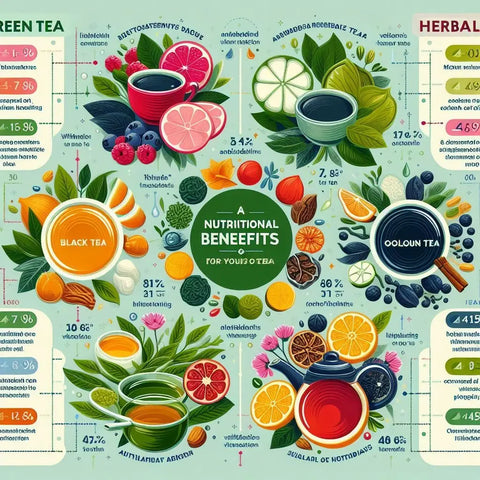
Polyphenols: The Primary Bioactive Compounds in Tea
Polyphenols are a broad class of plant compounds that give tea much of its color, astringency, and biological activity. They are not vitamins or minerals — they are secondary plant metabolites, and their effects in the human body are still an active area of research.
Key Polyphenol Groups in True Tea
- Catechins — the dominant polyphenols in green tea. Epigallocatechin gallate (EGCG) is the most studied catechin. Catechin content decreases as oxidation increases, so green tea has more catechins than black tea.
- Theaflavins and thearubigins — formed during oxidation; these are the primary polyphenols in black tea and give it its dark color and characteristic astringency.
- Flavonols — including quercetin and kaempferol; present across all true tea types.
- Tannins — a subset of polyphenols responsible for the dry, puckering sensation in strongly brewed tea.
L-Theanine: An Amino Acid Associated with Tea
L-theanine is an amino acid found naturally in Camellia sinensis and a small number of other sources. It is present in all true teas and is particularly concentrated in shade-grown varieties like Gyokuro and Matcha. L-theanine is water-soluble and extracts readily during steeping. Research suggests it may promote a state of calm alertness, and it is often studied in combination with caffeine. Individual responses vary, and the evidence base, while promising, is still developing.
Mineral Contribution
Brewed tea provides small amounts of several minerals, though it is not a significant dietary source of any of them at typical serving sizes. Manganese is the most notable — black and green tea can contribute meaningfully to daily manganese intake with regular consumption. Fluoride is also present, particularly in older leaves and lower-grade teas; this is generally considered beneficial for dental health at normal intake levels but worth noting for those drinking very large quantities daily. Potassium, magnesium, and zinc are present in trace amounts.
Nutritional Differences Among Tea Types
Processing method is the primary driver of nutritional differences between true tea types. The table below summarizes the key distinctions.
| Tea Type | Oxidation | Primary Polyphenols | Caffeine (approx.) | L-Theanine | Notable Characteristic |
|---|---|---|---|---|---|
| Green tea | None | Catechins (EGCG) | 20–45 mg | Moderate–High | Highest catechin content |
| White tea | Minimal | Catechins, flavonols | 15–30 mg | Moderate | Least processed; delicate |
| Oolong tea | Partial (15–85%) | Mixed catechins + theaflavins | 30–50 mg | Moderate | Wide style range |
| Black tea | Full | Theaflavins, thearubigins | 40–70 mg | Lower | Highest caffeine; most robust |
| Pu-erh tea | Full + fermented | Theabrownins, theaflavins | Moderate–High | Lower | Unique fermented compounds |
| Matcha | None (whole leaf) | Catechins (very high) | 60–80 mg | High | Whole leaf consumed |
Herbal Infusions
Herbal infusions are not made from Camellia sinensis and have a completely different nutritional profile. They contain no caffeine (with rare exceptions like yerba mate and guayusa), no L-theanine, and no tea catechins. Their bioactive compounds depend entirely on the plant used — chamomile contains apigenin, hibiscus contains anthocyanins, peppermint contains menthol and rosmarinic acid. Each herbal infusion should be evaluated on its own botanical merits, not as a category.
How Additions Change the Nutrition Profile
Plain brewed tea is essentially calorie-free. What you add to it can change that significantly.
| Addition | Typical Amount | Approximate Calories Added | Other Nutritional Impact |
|---|---|---|---|
| Whole milk | 2 tbsp (30 ml) | ~19 kcal | Adds fat, protein, calcium; may bind some polyphenols |
| Oat milk | 2 tbsp (30 ml) | ~15 kcal | Adds carbohydrates; lower polyphenol binding than dairy |
| White sugar | 1 tsp (4 g) | ~16 kcal | Pure carbohydrate; no nutritional benefit |
| Honey | 1 tsp (7 g) | ~21 kcal | Fructose and glucose; trace minerals; no meaningful advantage over sugar at this quantity |
| Flavored syrup | 1 pump (~15 ml) | ~50–80 kcal | High sugar; can turn tea into a high-calorie drink quickly |
| Condensed milk | 1 tbsp (20 g) | ~60 kcal | High sugar and fat; common in Southeast Asian tea preparations |
A note on milk and polyphenols: some research suggests that dairy proteins (caseins) may bind to tea catechins and theaflavins, potentially reducing their bioavailability. The practical significance of this at normal serving sizes is debated, and the evidence is not conclusive. If this is a concern, drinking tea plain or with plant-based milk is a straightforward alternative.
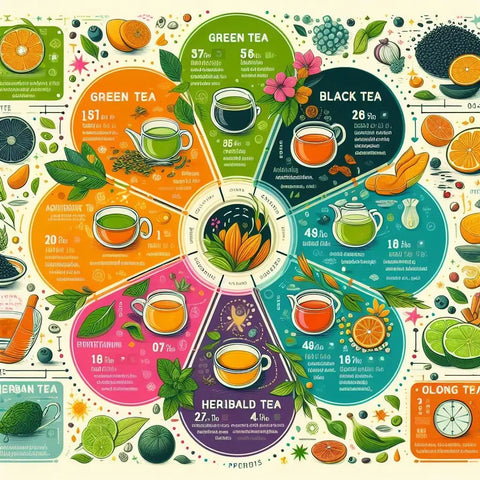
How Brewing Variables Affect Nutritional Compounds
The nutritional composition of your cup is not fixed — it is shaped by how you brew.
- Water temperature: Higher temperatures extract more caffeine and polyphenols faster. Green tea brewed at boiling (212°F/100°C) will be more bitter and higher in caffeine than the same tea brewed at 175°F (80°C).
- Steep time: Longer steeping increases extraction of all water-soluble compounds — caffeine, polyphenols, tannins, and minerals. Over-steeping increases bitterness (from tannins) without proportionally increasing beneficial compounds.
- Leaf-to-water ratio: More leaf per cup means more of everything — caffeine, polyphenols, flavor. A standard starting point is 1 teaspoon (2–3 g) per 8 oz (240 ml).
- Leaf grade: Whole-leaf teas release compounds more gradually than broken-leaf or fannings-grade teas, which extract quickly and can taste harsher.
- Water quality: Hard or chlorinated water can affect flavor and may slightly alter extraction efficiency. Filtered water is generally recommended.
Reading Tea Labels and Serving Sizes
Most loose leaf teas and tea bags are sold without a Nutrition Facts panel because a single serving of plain brewed tea contains negligible regulated nutrients. When a panel does appear, check the serving size carefully — it may be listed per dry leaf weight (e.g., 2 g), not per brewed cup. Ready-to-drink bottled teas are a different matter: many contain added sugar, flavoring, and preservatives, and their Nutrition Facts panels should be read as you would any packaged beverage. A bottled "green tea" drink with 20 g of added sugar per bottle is nutritionally very different from a cup of plain brewed green tea.
Practical Choices for Everyday Tea Drinkers
- For the lowest calorie option: Brew plain, unsweetened tea of any type. All true teas and most herbal infusions are essentially calorie-free without additions.
- For a polyphenol-rich option: Choose fresh tea you enjoy and brew it consistently. Green tea and Matcha are known for catechins, but amounts vary by cultivar, processing, serving size, and preparation.
- For the lowest caffeine: Choose a naturally caffeine-free herbal infusion, checking the ingredient list for exceptions such as yerba mate or guayusa. Caffeine in true tea cannot be predicted reliably by color alone.
- For a calorie-free evening drink: Any herbal infusion — chamomile, peppermint, rooibos, hibiscus — brewed plain.
- For replacing sugary drinks: Unsweetened iced tea (any type) is a practical, low-calorie substitute for sodas and sweetened juices.
A Note on Health Claims and Evidence
Tea has been studied extensively, and research has identified associations between regular tea consumption and various health markers. However, most large studies are observational — they show correlation, not causation — and results vary across populations, tea types, and preparation methods. Tea should not be understood as a treatment, cure, or prevention for any disease or medical condition. Individual responses to caffeine, polyphenols, and other compounds vary considerably based on genetics, gut microbiome, overall diet, and health status. If you have specific health concerns or conditions, consult a qualified healthcare professional rather than relying on dietary changes alone.
Frequently Asked Questions
Does tea count toward my daily fluid intake?
Yes. Despite containing caffeine, tea contributes to daily hydration. The mild diuretic effect of caffeine at typical tea-drinking quantities does not offset the fluid you consume. Plain brewed tea is a valid hydrating beverage for most people.
Is there a meaningful nutritional difference between loose leaf and tea bags?
The core compounds — caffeine, polyphenols, L-theanine — are present in both formats. Loose leaf tea, using whole or large-leaf pieces, tends to extract more gradually and can yield a more complex cup. Standard tea bags use broken leaf or fannings, which extract quickly. The nutritional difference per cup is modest; the flavor difference is often more noticeable.
Does adding lemon to tea change its nutritional profile?
Yes, in a minor but interesting way. The vitamin C (ascorbic acid) in lemon juice may help stabilize certain catechins during digestion, potentially improving their absorption. It also adds a small amount of vitamin C to the cup. The effect is real but modest at the quantities typically used.
How does Matcha differ nutritionally from brewed green tea?
Matcha is made by whisking powdered whole green tea leaf into water — you consume the entire leaf, not just the water-soluble extract. Because the whole leaf is consumed, Matcha can provide more leaf compounds and fiber than brewed green tea, but the amount depends heavily on powder dose and serving size. It may also contain more caffeine per serving, so labels and preparation amounts matter.
Can drinking a lot of tea cause any nutritional concerns?
Large amounts of strong tea may raise several considerations, but there is no single cup threshold that applies to everyone because serving size, caffeine content, diet, and individual sensitivity differ. High tannin intake may reduce iron absorption from plant-based foods when tea is consumed with meals; spacing tea between meals rather than during them is a practical way to minimize this. Very high fluoride intake from low-grade teas consumed in large quantities has been associated with dental and skeletal fluorosis in some populations, though this is not a concern at typical moderate intake. Caffeine sensitivity varies widely, and individuals who are pregnant, have anxiety disorders, or are sensitive to caffeine should monitor their intake accordingly.
Related collection
Explore Tea Collections
See tea selections and related pantry ingredients.
Browse Tea CollectionsProducts and collections are presented for general ingredient, culinary, botanical, craft, or gardening use. Content on this site is educational only and is not medical advice.
Leave a comment