



2 pack x 1200 Cowhorn Pepper Seeds Hot Chili Cow Horn Pepper Seeds for planting
Regular price $9.00
Cowhorn pepper seeds produce long, curved hot peppers (6–10 inches) with medium heat—versatile for roasting, stuffing, drying, and making hot sauce. This 2-pack provides 2,400 seeds total (2 packets × 1,200 seeds each). Start indoors 8–10 weeks before last frost for peppers ready to harvest in 85–95 days from transplant.
Cowhorn peppers get their name from the distinctive curved shape—long, tapered, and twisted like a cow's horn. These medium-hot peppers (10,000–30,000 Scoville units) are thick-walled and perfect for roasting, stuffing, or drying into powder. This 2-pack of 1,200-seed packets (2,400 seeds total) provides enough for a serious pepper patch. The plants are productive, often yielding 20+ peppers per plant. Ripens from green to red, with heat increasing as they mature.
Key Benefits
- 2 packs × 1,200 seeds = 2,400 cowhorn pepper seeds total
- Long curved peppers, 6–10 inches
- Medium heat: 10,000–30,000 Scoville units
- Thick-walled – excellent for roasting and stuffing
- Days to harvest: 85–95 from transplant
- Prolific plants – 20+ peppers per plant
How to Grow
- Start indoors 8–10 weeks before last frost
- Sow 1/4 inch deep; germination in 10–14 days at 75–85°F
- Transplant after all frost risk; space 18–24 inches apart
- Plant in full sun with well-draining soil
- Harvest green for milder heat, red for full heat
- Dry fully red peppers for powder or flakes
Specifications
Quantity: 2,400 seeds (2 × 1,200). Type: Cowhorn / Cayenne-type. Pepper length: 6–10 inches. Heat: 10,000–30,000 SHU. Days to harvest: 85–95. Spacing: 18–24 inches. Sun: Full sun (6+ hours).
What's Included
- 2 seed packets (1,200 seeds each, 2,400 total)
- Resealable packaging
Care & Storage
Store seeds in a cool, dry place. Pepper seeds remain viable 2–4 years when properly stored. Avoid overwatering; peppers prefer slightly dry conditions between waterings.
Key Terms
- Capsicum annuum — Botanical name for most common pepper species including cowhorn
- Scoville Heat Units (SHU) — Scale measuring pepper heat; cowhorn is moderate at 10,000–30,000
- Cayenne-type — Class of long, hot peppers often dried and ground into powder
A basket of curved red peppers drying in the kitchen window—by winter, they'll be crushed into flakes that heat up every dish.
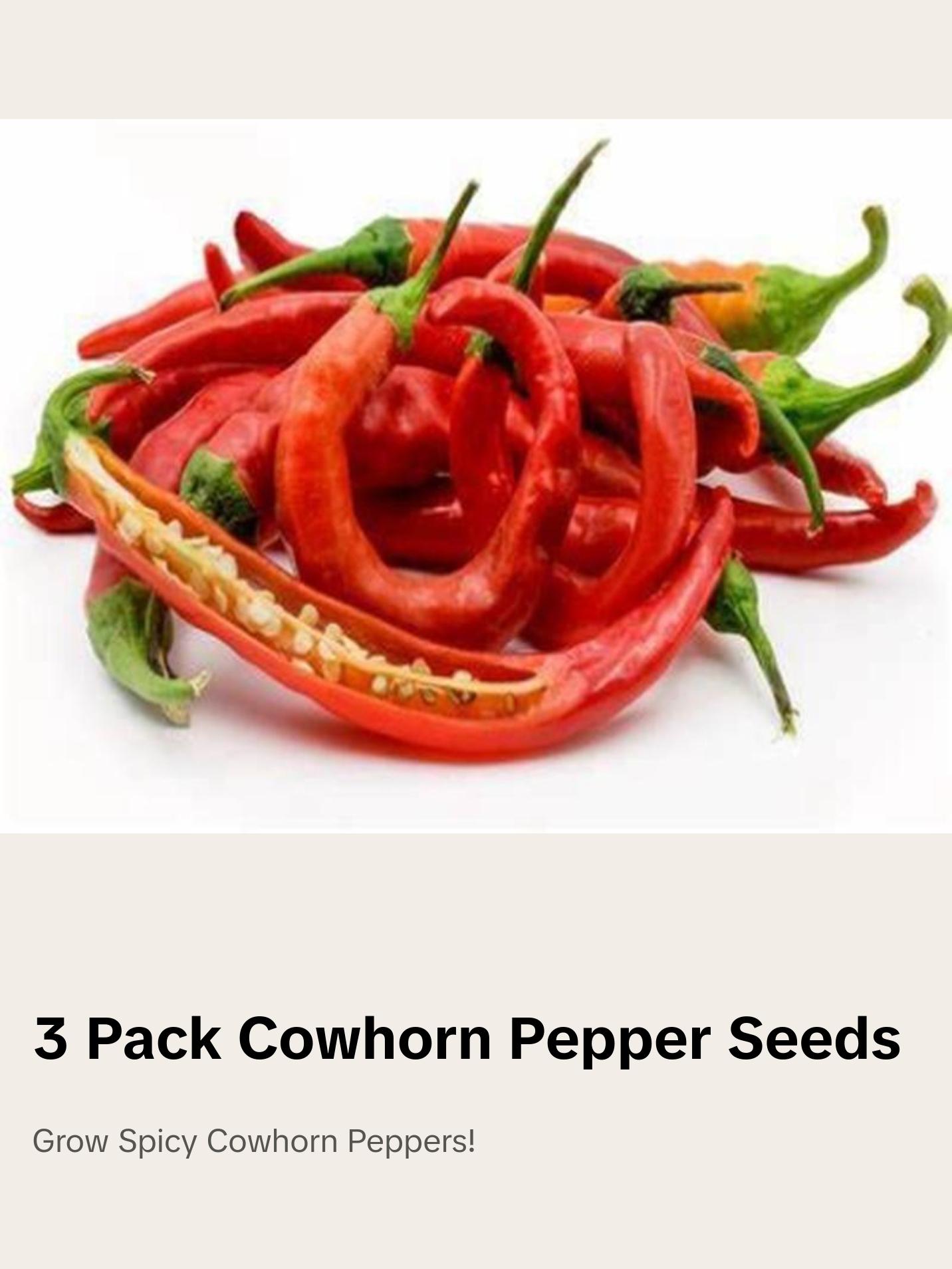
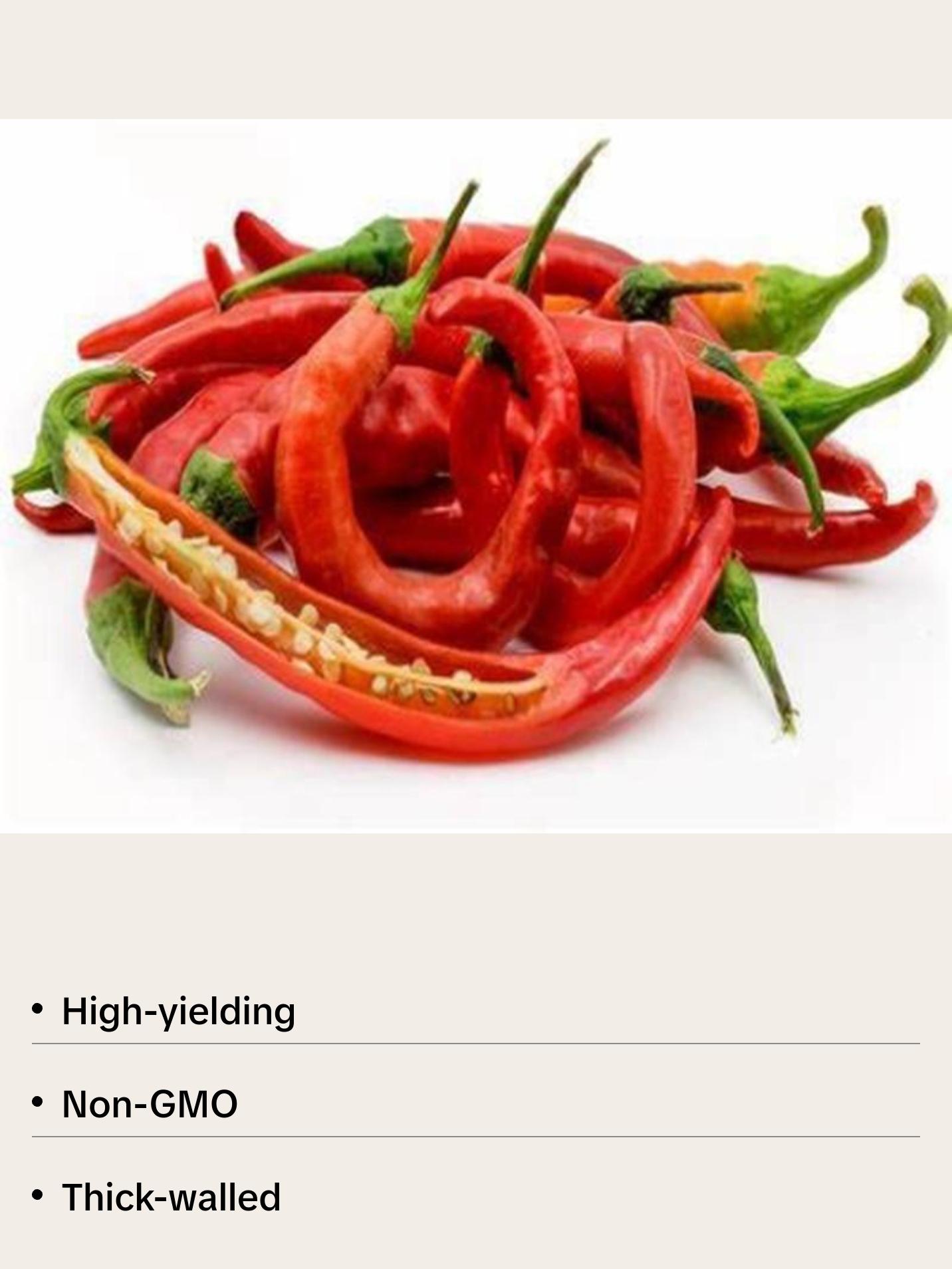
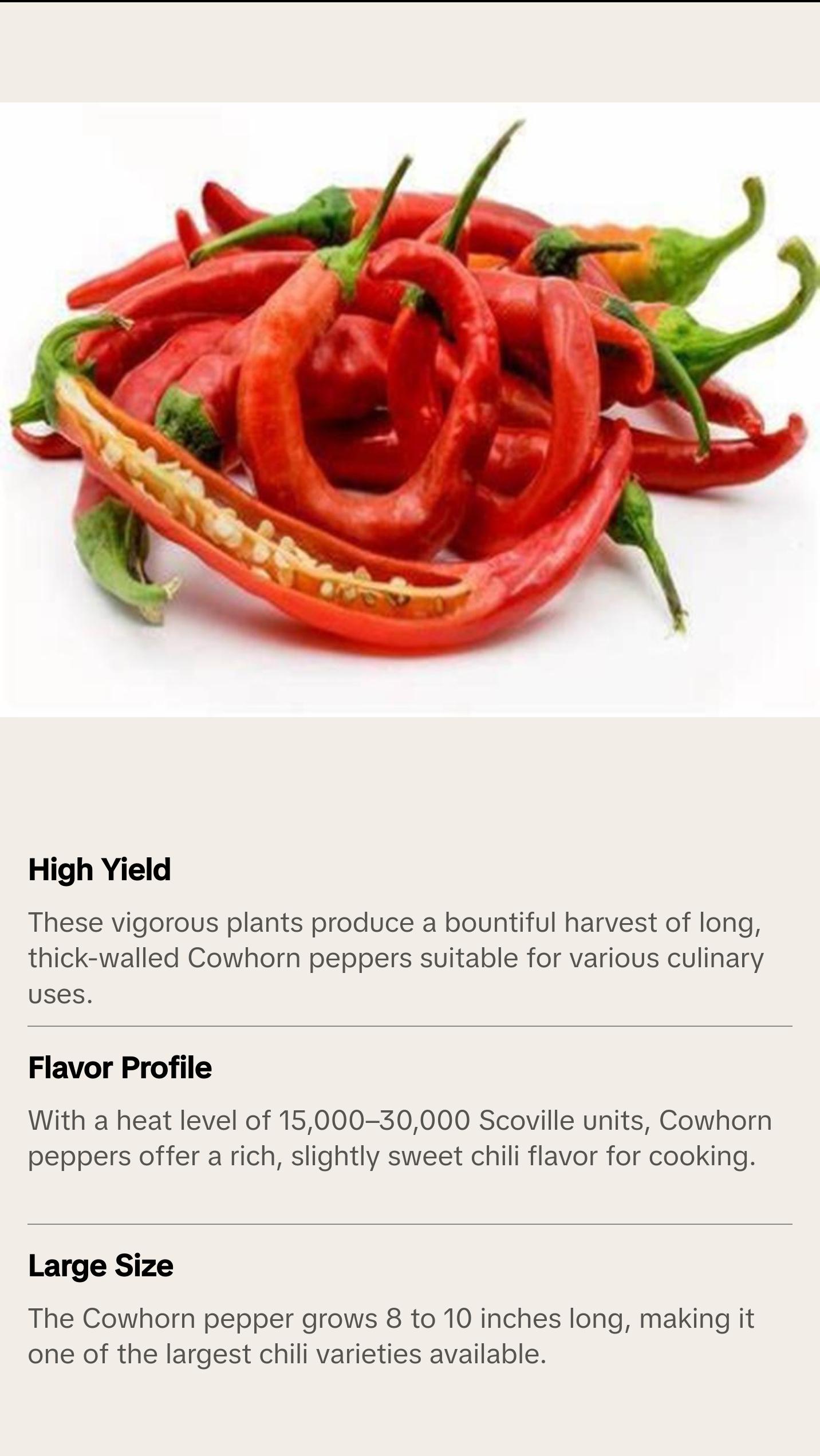

Cowhorn Pepper Hot Chili Cow Horn is a productive garden favorite that delivers fresh, nutrient-rich harvests you can enjoy all season long. Easy to grow in containers, raised beds, or traditional gardens — perfect for home cooks and gardeners who want the unmatched flavor of homegrown produce.
This variety thrives in USDA zones 3-11 depending on your climate, and adapts beautifully to indoor and outdoor growing. Start from seed for the most rewarding gardening experience — there is nothing quite like nurturing a plant from its very first sprout.
🌱 Step-by-Step Growing Guide
1. Seed Prep and Sowing: Start seeds indoors 4-6 weeks before last frost, or direct sow after soil warms to 60F+. Soak larger seeds overnight for faster germination.
2. Planting and Container Setup: Full sun (6-8+ hours daily). Use rich, well-draining soil amended with compost. Space according to variety — containers (10-20 gallon) or raised beds work great.
3. Germination and Early Care: Expect sprouts in 5-14 days at 65-80F. Keep soil evenly moist. Thin seedlings to proper spacing — crowded plants produce less.
4. Growth and Maintenance: Mulch around plants to retain moisture and suppress weeds. Fertilize every 3-4 weeks with balanced organic fertilizer. Watch for common pests and use companion planting.
5. Harvesting: Harvest regularly when produce reaches desired size — frequent picking encourages continued production. Morning harvest gives the freshest, crispest results.
💡 Pro Tips for Every State
- Midwest and Northeast: Start indoors in March-April for strong transplants. Use cold frames or row covers to extend the growing season.
- South and Southwest: Direct sow once soil warms above 60F. Provide consistent irrigation in summer heat for best production.
- Container and Balcony Growers: Grow in 10-20 gallon containers on sunny balconies. Cherry and compact varieties are perfect for small spaces.
🍳 Easy Recipes and Creative Uses
- Garden-Fresh Salad: Harvest and toss together a nutrient-rich salad with crisp leaves, herbs, and a light vinaigrette
- Homemade Stir-Fry or Soup: Dice fresh garden vegetables into quick stir-fries, soups, or one-pot meals for healthy weeknight dinners
- Pickling & Preserving: Preserve your harvest by pickling, fermenting, or freezing — enjoy homegrown flavors all year round
📋 Care and Storage
- Store unused seeds in a cool, dry place — sealed container in the fridge extends viability 2-3+ years
- Water consistently — morning watering prevents fungal issues and keeps plants hydrated through the day
- Mulch around plants to retain moisture, suppress weeds, and regulate soil temperature
- Check your USDA hardiness zone at planting time for the best results in your specific region
🧺 Harvesting & Post-Harvest Storage
Timing your harvest correctly maximizes flavor, nutrition, and shelf life. Most leafy greens reach peak quality when harvested in the cool morning hours after dew has evaporated but before afternoon heat causes wilting. Use clean, sharp pruning shears to make precise cuts that heal quickly and reduce disease entry points. For root vegetables, wait until foliage begins to yellow and die back naturally before gently loosening soil with a garden fork. Store harvested produce properly: leafy greens wrapped in damp paper towels inside perforated bags maintain crispness for 7-10 days in the refrigerator crisper drawer at 35-40°F. Root vegetables store best in cool, dark, humid conditions (32-40°F, 90-95% humidity) and can last 3-6 months when properly cured. Preserve surplus harvest through dehydrating, freezing, or fermentation for year-round enjoyment.
🔬 Soil Science & Amendments
Understanding your soil profile is the foundation of successful cultivation. Test soil pH using a simple at-home kit — most garden varieties prefer a range between 6.0 and 7.0 for optimal nutrient uptake. Amend heavy clay soils with perlite, vermiculite, or aged compost to improve drainage and root penetration. Sandy soils benefit from organic matter additions like coconut coir or well-rotted manure to increase water retention. Consider adding mycorrhizal fungi inoculants at planting time to establish beneficial root networks that enhance nutrient absorption by up to 700%. Top-dress with worm castings monthly during the growing season for a gentle, balanced nutrient boost that won't burn tender seedlings.
Integrated Pest Management and Season Extension
Prevention-First Approach: The most effective pest management starts before problems appear. Choose disease-resistant varieties when possible, rotate crops annually to break pest cycles, and maintain proper plant spacing for air circulation that prevents fungal diseases. Healthy, well-nourished plants are naturally more resistant to pests and diseases than stressed plants.
Biological Controls: Encourage natural predators in your garden. Ladybugs consume up to 5,000 aphids in their lifetime. Green lacewing larvae are voracious predators of soft-bodied insects. Install birdhouses to attract insectivorous birds. Plant yarrow, fennel, and sweet alyssum to provide habitat for predatory wasps and hoverflies. A single bat house can eliminate thousands of mosquitoes nightly.
Organic Remedies: When intervention is needed, reach for the gentlest solution first. A strong spray of water dislodges many soft-bodied insects. Neem oil spray (diluted per label instructions) disrupts feeding and reproduction of over 200 insect species while being safe for beneficial insects when applied correctly. Diatomaceous earth creates a physical barrier against crawling insects. BT (Bacillus thuringiensis) targets caterpillars specifically without harming other organisms.
Extending Your Growing Season: Use cold frames, row covers, and hoop houses to add 4-8 weeks to both ends of your growing season. Start seeds indoors 6-8 weeks before last frost under LED grow lights. In fall, protect mature plants with frost cloth rated to 28 degrees F. For year-round growing, consider a simple greenhouse — even a small one can produce fresh herbs and greens through winter in most climates.


