



50 seeds Organic Sugar Apple Seeds for Planting Annona Squamosa tree seeds
Regular price $9.00
Sugar apple (Annona squamosa), also called sweetsop or custard apple, produces creamy, sweet fruit prized across tropical regions. This packet provides 50 organic seeds for starting your own trees. Expect 3–5 years to first fruit from seed, but the reward is homegrown tropical flavor impossible to find in stores.
Sugar apple is the kind of fruit you chase—that custard-like flesh with its blend of sweet and delicate tropical notes doesn't ship well, so the only way to taste it truly fresh is to grow your own. This 50-seed packet of organic Annona squamosa gives you a solid start. Be patient: trees from seed take years to fruit, but they're worth the wait.
Key Benefits
- 50 organic sugar apple seeds (Annona squamosa)
- Creamy, sweet custard-like fruit
- Known as sweetsop, custard apple, or Mãng Cầu
- Tropical tree reaching 15–20 feet
- Self-fertile—single tree can produce fruit
- 3–5 years from seed to first harvest
How to Grow
- Scarify seeds lightly and soak 24–48 hours in warm water
- Plant 1/2 inch deep in moist, well-draining potting mix
- Keep warm (75–85°F / 24–29°C); germination takes 3–6 weeks
- Provide bright light once sprouted
- Transplant to permanent location when 12+ inches tall
Specifications
Quantity: 50 seeds. Variety: Sugar Apple (Annona squamosa). Mature height: 15–20 ft. Spread: 10–15 ft. Fruit: Creamy white flesh, sweet. Hardiness: Zones 10–12 (or container in cooler zones). Sun: Full sun.
What's Included
- 50 organic sugar apple seeds
- Germination and growing guide
Care & Storage
Store seeds in refrigerator for best viability. Plant within 6 months of purchase. Trees prefer well-draining soil, consistent moisture during fruiting, and protection from frost.
Key Terms
- Annona squamosa — Sugar Apple; tropical fruit tree in the Annonaceae family
- Sweetsop — Common name for sugar apple; refers to the sweet, custard-like flesh
- Scarification — Nicking or sanding hard seed coats to improve water absorption
Important Notice
- Growers in frost-prone areas without greenhouse/container plan
- Those wanting fruit within 1–2 years (trees take 3–5 years)
- Anyone unable to provide warm, humid growing conditions
A ripe sugar apple split open in the afternoon shade—that creamy sweetness is what summer in the tropics tastes like.
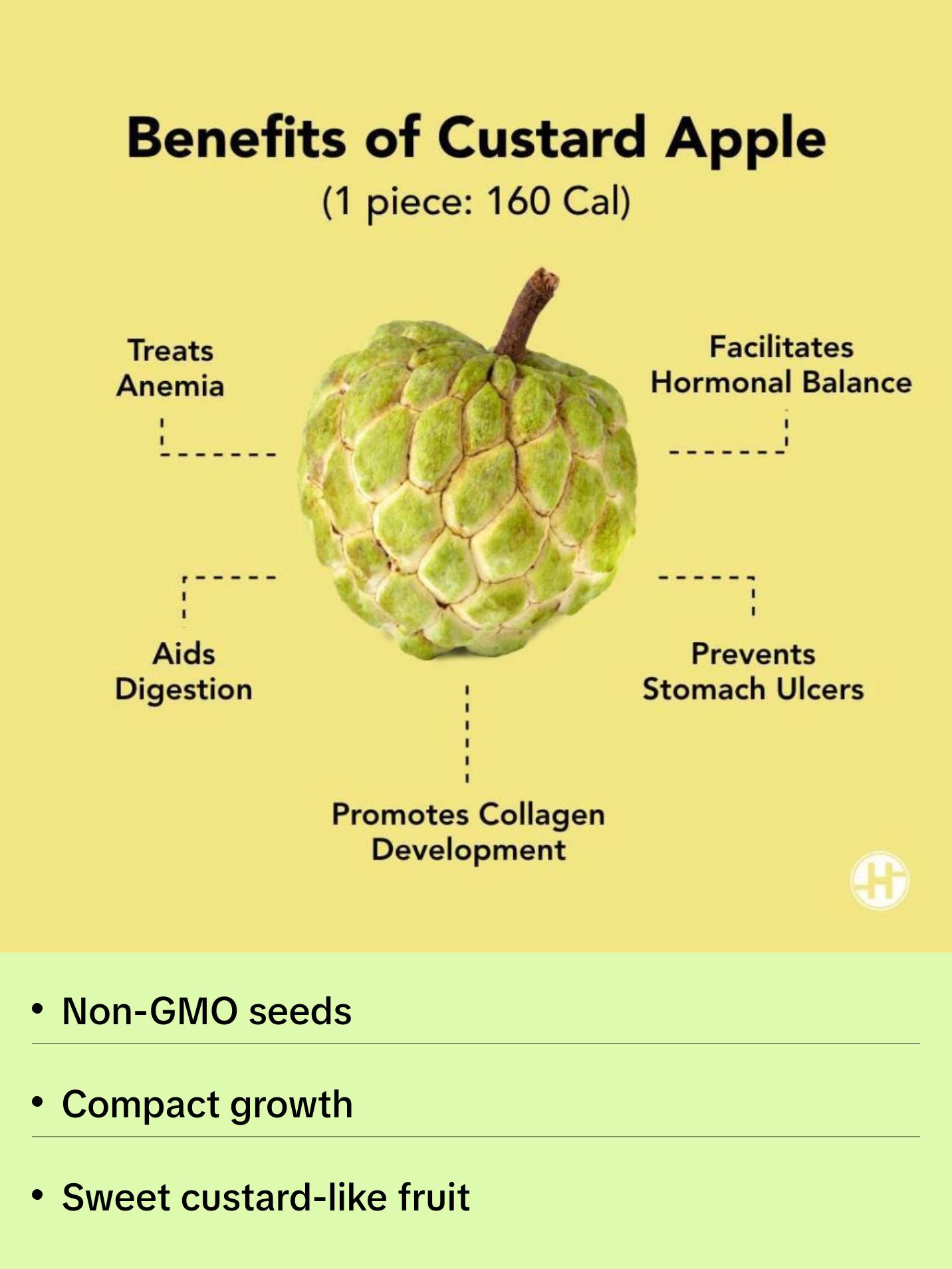


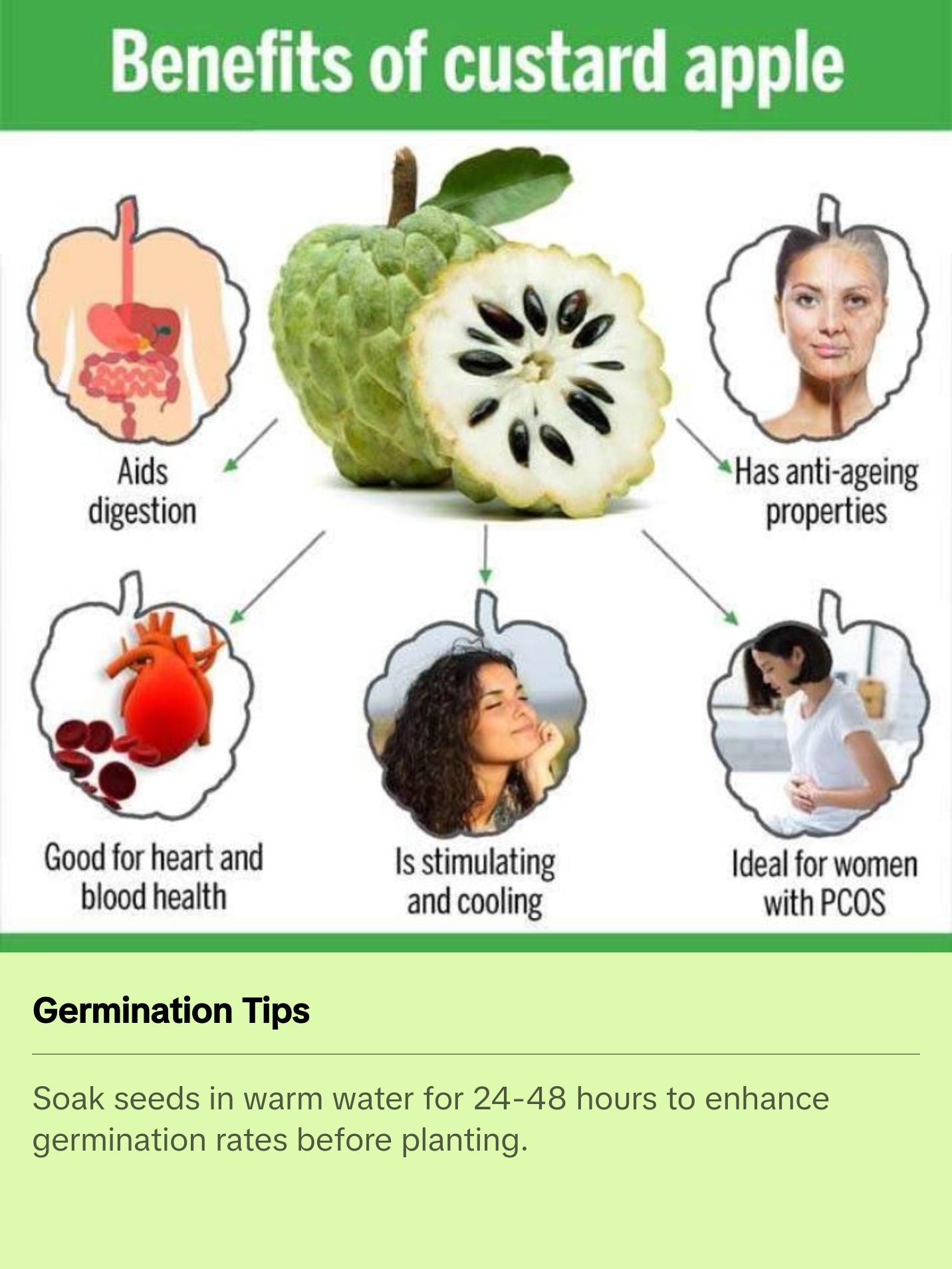
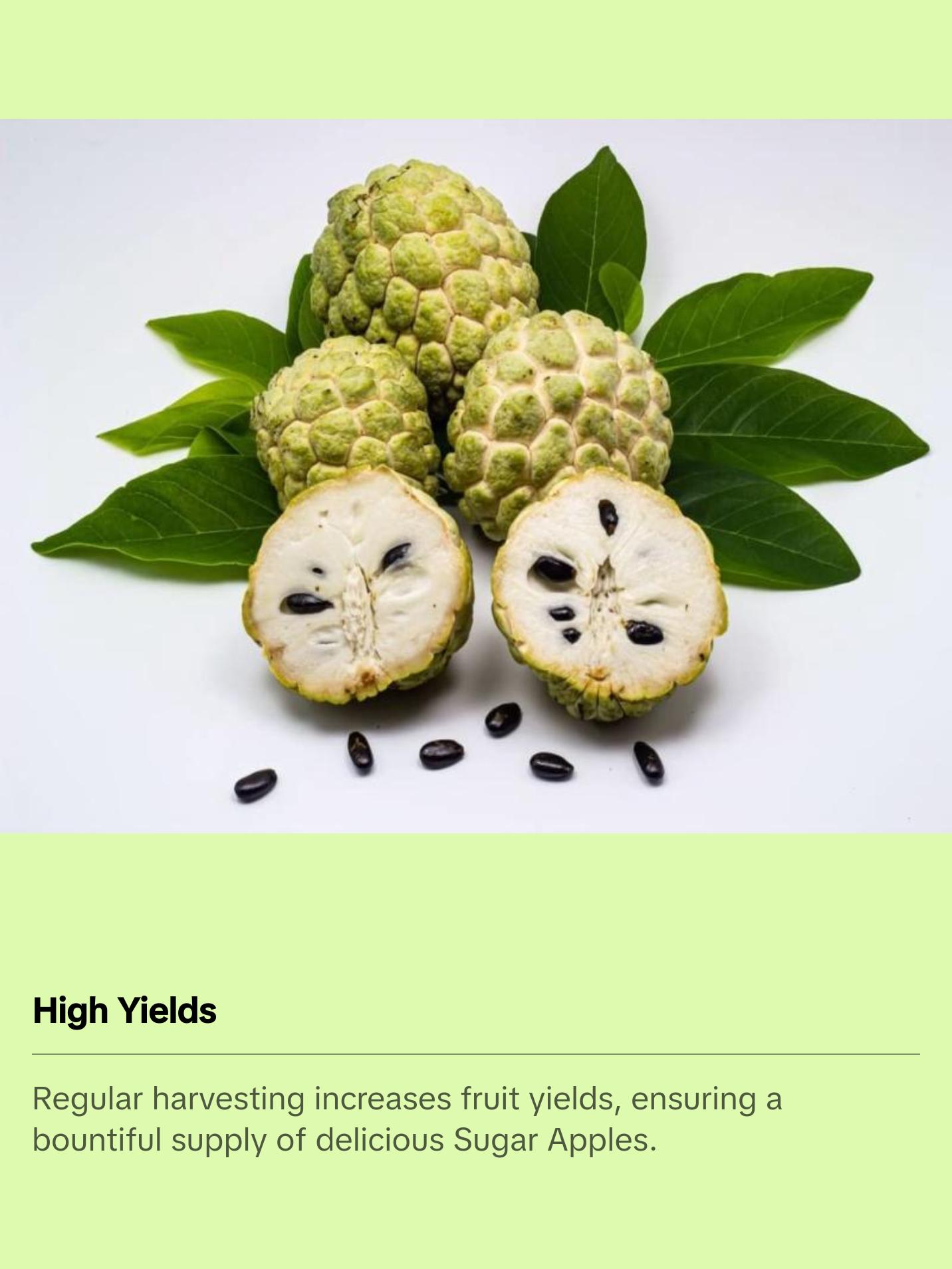

Sugar Apple Custard Annona Squamosa Sweetsop is an exciting tropical or temperate fruit you can grow from seed right at home. Experience the thrill of watching seeds develop into productive fruiting plants — perfect for exotic fruit lovers, container gardeners, and anyone craving fresh, homegrown fruit.
This variety thrives in USDA zones 3-11 depending on your climate, and adapts beautifully to indoor and outdoor growing. Start from seed for the most rewarding gardening experience — there is nothing quite like nurturing a plant from its very first sprout.
🌱 Step-by-Step Growing Guide
1. Seed Prep and Sowing: Soak seeds 12-24 hours in warm water. Some fruit seeds require cold stratification (30-90 days in moist sand in the fridge). Fresh seeds from ripe fruit germinate best.
2. Planting and Container Setup: Full sun (6-8+ hours). Use large containers (15-30 gallon) with excellent drainage. Rich, well-draining soil slightly acidic (pH 5.5-7.0). Provide sturdy support for vines.
3. Germination and Early Care: Germination takes 14-60 days at 70-85F. Keep warm and consistently moist. Be patient — fruit seeds can be slow and irregular.
4. Growth and Maintenance: Fertilize every 4-6 weeks with balanced fertilizer; switch to high-potassium when flowering begins. Hand-pollinate flowers for better fruit set. Prune to maintain shape.
5. Harvesting: Harvest timing varies: berries in 1-2 years, tree fruit in 3-7+ years from seed. Pick when fruits reach full color and yield slightly to gentle pressure.
💡 Pro Tips for Every State
- Midwest and Northeast: Start indoors under grow lights. Grow in large containers (15-30 gallon) for easy winter protection indoors.
- South and Southwest: Direct sow or transplant once nights stay above 60F. Provide sturdy support for climbing varieties.
- Container and Balcony Growers: Large grow bags on sunny balconies work great. Hand-pollinate flowers for better fruit set in containers.
🍳 Easy Recipes and Creative Uses
- Fresh Tropical Fruit Bowl: Scoop ripe fruit into a bowl with lime juice, a sprinkle of chili, and fresh mint for a refreshing treat
- Smoothies & Frozen Desserts: Blend fresh fruit with banana, coconut milk, and honey for creamy smoothies or homemade sorbet
- Jams, Salsas & Cocktails: Turn your harvest into artisan jams, tangy fruit salsas, or vibrant cocktail garnishes and mixers
📋 Care and Storage
- Store unused seeds in a cool, dry place — sealed container in the fridge extends viability 2-3+ years
- Water consistently — morning watering prevents fungal issues and keeps plants hydrated through the day
- Mulch around plants to retain moisture, suppress weeds, and regulate soil temperature
- Check your USDA hardiness zone at planting time for the best results in your specific region
Advanced Soil Science and Companion Planting
Understanding Your Soil: The foundation of every successful garden begins beneath the surface. Before planting, test your soil pH using an inexpensive kit from any garden center. Most seeds thrive in slightly acidic to neutral soil (pH 6.0-7.0). If your soil is too acidic, add agricultural lime; if too alkaline, add sulfur or peat moss. The ideal soil structure is loamy — a balanced mix of sand, silt, and clay that retains moisture while allowing good drainage.
Building Living Soil: Healthy soil is a living ecosystem containing billions of microorganisms per teaspoon. Feed your soil with aged compost, worm castings, and mycorrhizal fungi inoculant. These beneficial organisms form symbiotic relationships with plant roots, extending their effective root zone by up to 700% and making locked-up nutrients bioavailable. Avoid synthetic fertilizers that can disrupt this delicate microbial balance.
Companion Planting Strategies: Strategic plant pairings can dramatically improve growth, pest resistance, and flavor. Plant aromatic herbs like basil, dill, and cilantro nearby to attract beneficial pollinators and repel harmful insects through volatile oil release. Marigolds are excellent border plants that deter nematodes and aphids. Avoid planting near allelopathic species like black walnut, which release juglone into the soil.
Mulching for Success: Apply 2-3 inches of organic mulch (straw, shredded leaves, or wood chips) around established seedlings. Mulch regulates soil temperature, conserves moisture by up to 70%, suppresses weeds, and gradually feeds the soil as it decomposes. Leave a small gap around stems to prevent collar rot.
Integrated Pest Management and Season Extension
Prevention-First Approach: The most effective pest management starts before problems appear. Choose disease-resistant varieties when possible, rotate crops annually to break pest cycles, and maintain proper plant spacing for air circulation that prevents fungal diseases. Healthy, well-nourished plants are naturally more resistant to pests and diseases than stressed plants.
Biological Controls: Encourage natural predators in your garden. Ladybugs consume up to 5,000 aphids in their lifetime. Green lacewing larvae are voracious predators of soft-bodied insects. Install birdhouses to attract insectivorous birds. Plant yarrow, fennel, and sweet alyssum to provide habitat for predatory wasps and hoverflies. A single bat house can eliminate thousands of mosquitoes nightly.
Organic Remedies: When intervention is needed, reach for the gentlest solution first. A strong spray of water dislodges many soft-bodied insects. Neem oil spray (diluted per label instructions) disrupts feeding and reproduction of over 200 insect species while being safe for beneficial insects when applied correctly. Diatomaceous earth creates a physical barrier against crawling insects. BT (Bacillus thuringiensis) targets caterpillars specifically without harming other organisms.
Extending Your Growing Season: Use cold frames, row covers, and hoop houses to add 4-8 weeks to both ends of your growing season. Start seeds indoors 6-8 weeks before last frost under LED grow lights. In fall, protect mature plants with frost cloth rated to 28 degrees F. For year-round growing, consider a simple greenhouse — even a small one can produce fresh herbs and greens through winter in most climates.


